24 Baking Recipe Journal Ideas for Sweet Memories Kept
Some of the sweetest memories begin in the kitchen, with warm cookies, handwritten recipes, and the smell of a freshly baked cake. But keeping those favorite recipes organized can quickly become a challenge.
These Baking Recipe Journal Ideas will help you turn scattered notes, treasured family recipes, and baking experiments into a beautiful, practical collection worth keeping for years. From tracking cookie textures and comparing cake results to recording ingredient substitutions and preserving favorite treats, there is something here for every home baker.
You don’t need expensive stationery or perfect handwriting to get started. A simple notebook, a few thoughtful details, and your favorite recipes are enough. I’ve noticed that recording small changes, such as baking time or ingredient measurements, makes it much easier to recreate successful batches. Explore these creative ideas, find a style that suits you, and start building a baking journal filled with useful notes and sweet memories.
Cookie Recipe Testing Pages

The secret to a more useful baking journal is recording what actually happens in the oven. Dedicate a page to testing cookie recipes, including the baking temperature, chilling time, spread, and final texture. These details help you repeat successful batches instead of guessing what worked last time.
Ingredients
For a simple chocolate chip cookie test batch:
- 1 cup all-purpose flour
- 1/2 teaspoon baking soda
- 1/4 teaspoon salt
- 1/2 cup softened unsalted butter
- 1/3 cup brown sugar
- 1/4 cup granulated sugar
- 1 large egg
- 1 teaspoon vanilla extract
- 3/4 cup chocolate chips
How to Make It
- Preheat the oven to 350°F (175°C) and line a baking sheet with parchment paper.
- Whisk together the flour, baking soda, and salt in a bowl.
- Beat the butter and both sugars until creamy. Mix in the egg and vanilla.
- Stir in the dry ingredients, then fold in the chocolate chips.
- Scoop tablespoon-sized portions onto the baking sheet, leaving space between them.
- Bake for 10 to 12 minutes until the edges are lightly golden. Cool and record the texture, spread, and baking time in your journal.
ALSO READ : Low Carb Low Calorie Recipes
Cake Crumb Comparison Charts

A cake can look beautiful on the outside yet have a completely different texture inside. Record your observations in a comparison chart to understand how mixing methods, baking times, and ingredient changes affect the crumb. This page is especially useful when developing a reliable birthday cake or celebration sponge.
Ingredients
For a basic vanilla cake:
- 1 1/2 cups all-purpose flour
- 1 teaspoon baking powder
- 1/4 teaspoon salt
- 1/2 cup softened unsalted butter
- 3/4 cup granulated sugar
- 2 large eggs
- 2 teaspoons vanilla extract
- 1/2 cup milk
How to Make It
- Preheat the oven to 350°F (175°C). Grease and line an 8-inch round cake pan.
- Combine the flour, baking powder, and salt in a bowl.
- Beat the butter and sugar until light and fluffy.
- Add the eggs one at a time, followed by the vanilla.
- Mix in the dry ingredients alternately with the milk until just combined.
- Pour the batter into the pan and bake for 25 to 30 minutes, or until a toothpick inserted into the center comes out clean.
- Cool completely, cut a slice, and record its softness, moisture, and crumb structure.
Pinterest Account : FreshRecipeIdeas1
Cookie Decorating Practice Logs
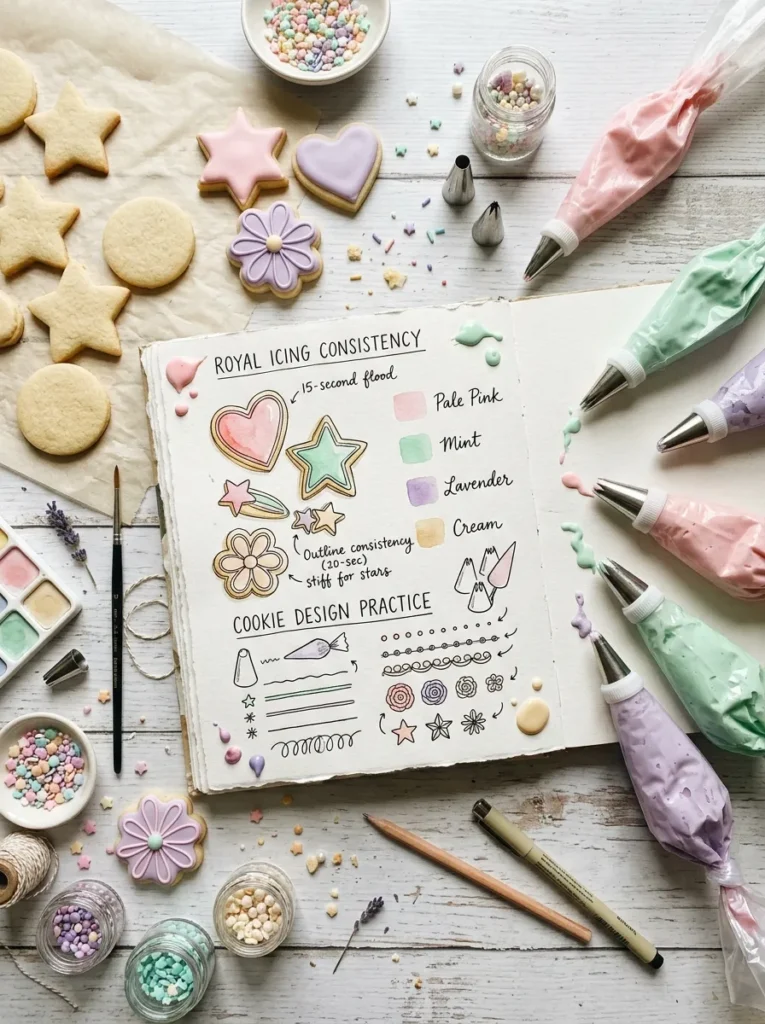
Decorated cookies become easier to reproduce when every detail is documented. Keep a practice log for icing colors, piping tips, consistency, drying time, and designs that worked well. Instead of relying on memory, you’ll have a reference for recreating floral cookies, birthday treats, or festive shapes for your next celebration.
Ingredients
For basic sugar cookies:
- 2 cups all-purpose flour
- 1/2 teaspoon baking powder
- 1/4 teaspoon salt
- 3/4 cup softened unsalted butter
- 3/4 cup granulated sugar
- 1 large egg
- 1 teaspoon vanilla extract
For simple icing:
- 1 cup powdered sugar
- 1 to 2 tablespoons milk
- Food coloring, as needed
How to Make It
- Whisk the flour, baking powder, and salt together.
- Beat the butter and sugar until creamy. Add the egg and vanilla.
- Mix in the dry ingredients until a soft dough forms. Chill for 30 minutes.
- Roll the dough to about 1/4 inch thick and cut into shapes.
- Bake at 350°F (175°C) for 8 to 10 minutes, until the edges are just beginning to turn golden. Cool completely.
- Mix the powdered sugar with milk a little at a time to create a pipeable icing. Divide and tint with food coloring.
- Decorate the cookies and record the colors, piping techniques, and drying results on your journal page.
Sourdough Baking Notes
BEFORE
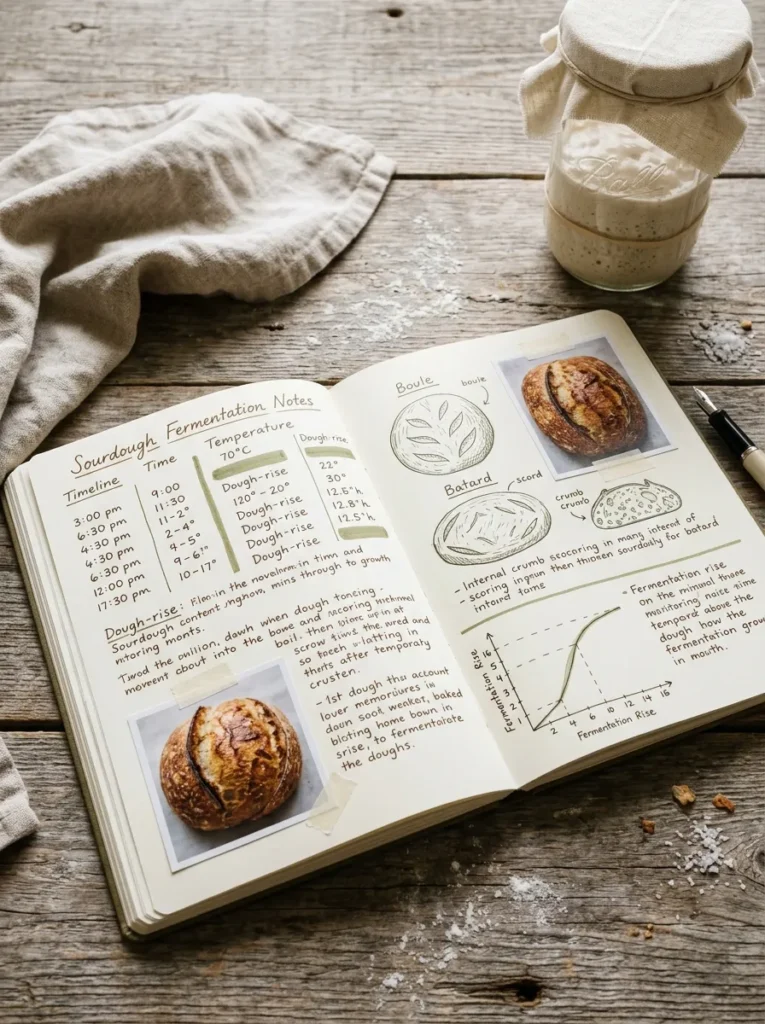
Sourdough baking can feel unpredictable when feeding times, room temperatures, and proofing periods are not recorded. One loaf may rise beautifully while the next turns out dense, leaving you unsure what changed.
AFTER
A dedicated log helps you connect each result with its conditions. Record starter activity, flour quantities, dough temperature, and fermentation time beside every bake.
Consistent notes make sourdough experiments easier to understand. Keep each entry simple, and record the loaf’s crust color, crumb structure, and flavor after cooling. Over several attempts, patterns become easier to recognize, helping you adjust hydration or proofing time with more confidence instead of changing several variables at once.
Ingredients
- 500 g bread flour
- 350 g water
- 100 g active sourdough starter
- 10 g salt
How to Make It
- Mix the flour and water until no dry flour remains. Rest for 30 minutes.
- Add the active starter and salt, then mix thoroughly.
- Perform several sets of stretch-and-folds over the first two hours.
- Let the dough ferment until noticeably expanded and airy, adjusting for room temperature.
- Shape the dough and place it in a floured proofing basket. Refrigerate overnight.
- Bake in a preheated covered Dutch oven at 450°F (230°C) for about 20 minutes covered, then another 20 to 25 minutes uncovered.
- Cool completely and record the fermentation, crust, and crumb results.
Muffin Batch Records
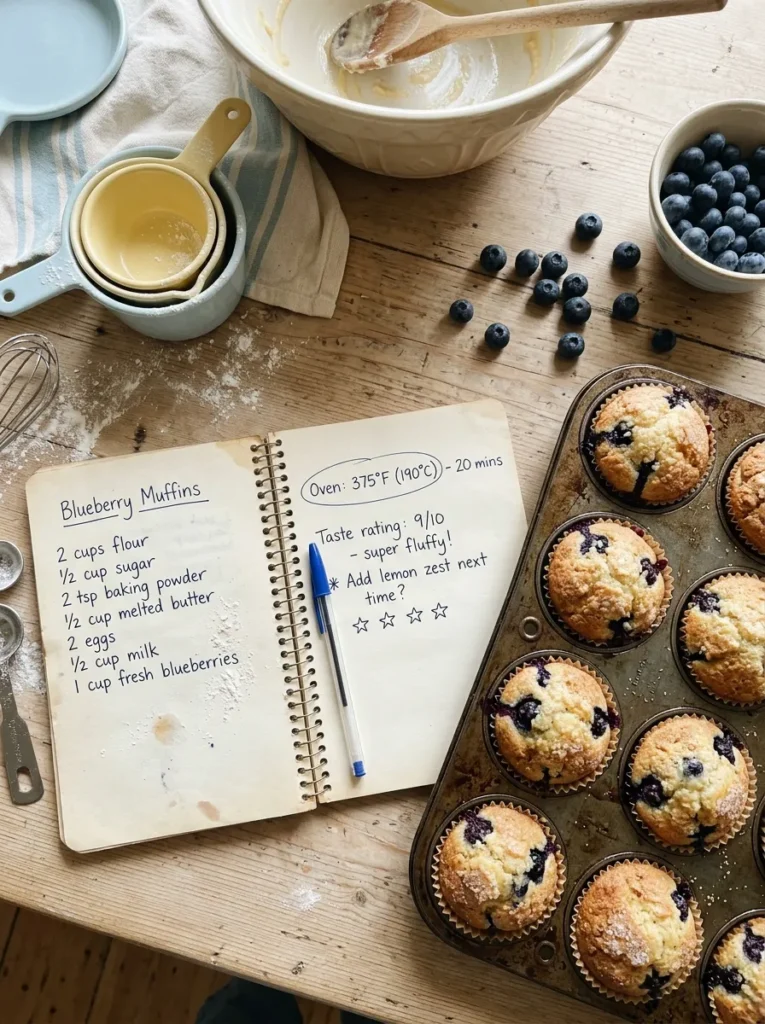
A batch record helps you discover why some muffins rise into tall, golden domes while others remain flat. Note the flour measurement, mixing method, fruit quantity, and baking temperature for each attempt. These small details are useful when adjusting a favorite recipe for breakfast, lunchboxes, or weekend brunch.
Ingredients
- 2 cups all-purpose flour
- 3/4 cup granulated sugar
- 2 teaspoons baking powder
- 1/2 teaspoon salt
- 1 large egg
- 3/4 cup milk
- 1/3 cup vegetable oil
- 1 teaspoon vanilla extract
- 1 cup fresh or frozen blueberries
How to Make It
- Preheat the oven to 375°F (190°C) and line a 12-cup muffin pan.
- Whisk the flour, sugar, baking powder, and salt in a large bowl.
- In another bowl, whisk the egg, milk, oil, and vanilla.
- Add the wet mixture to the dry ingredients and stir just until combined.
- Fold in the blueberries gently without overmixing.
- Divide the batter among the muffin cups and bake for 18 to 22 minutes.
- Cool before tasting. Record the rise, softness, sweetness, and any changes for your next batch.
Baking Method Comparison Pages
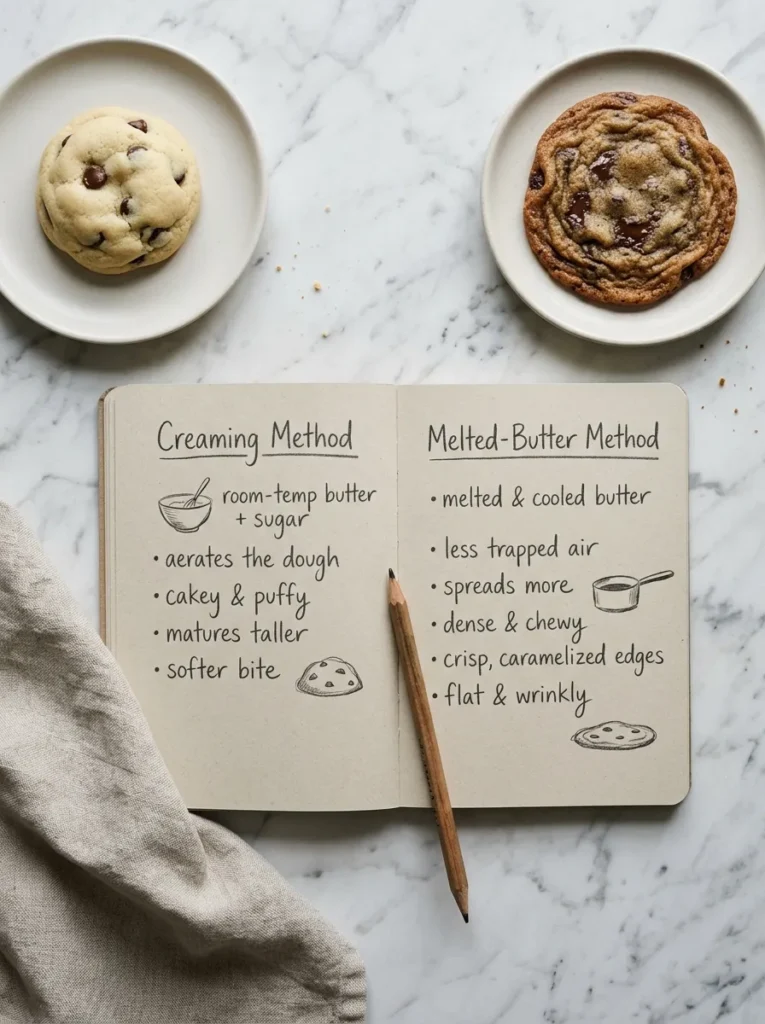
Choosing between baking methods can change the texture of the same recipe. A comparison page lets you test one variable at a time and record the difference. For example, cookies made with softened butter may spread differently from cookies made with melted butter, depending on the recipe and chilling time.
| Comparison Point | Softened Butter | Melted Butter |
| Preparation | Beat with sugar | Cool before mixing |
| Texture tendency | Often lighter when creamed | Often denser and chewier |
| Mixing method | Cream before adding eggs | Whisk with sugar and wet ingredients |
| Journal notes | Record aeration and spread | Record chewiness and spread |
Use a consistent recipe and keep ingredient quantities, oven temperature, and baking time the same wherever possible. Change only the butter preparation so your observations remain meaningful. Add photographs of each batch and write a short verdict after tasting. This simple experiment creates a useful reference for future baking decisions.
Ingredients
- 2 cups all-purpose flour
- 1/2 teaspoon baking soda
- 1/2 teaspoon salt
- 1/2 cup unsalted butter, softened or melted and cooled
- 1/2 cup brown sugar
- 1/4 cup granulated sugar
- 1 large egg
- 1 teaspoon vanilla extract
- 1 cup chocolate chips
How to Make It
- Preheat the oven to 350°F (175°C) and line two baking sheets with parchment paper.
- Mix the flour, baking soda, and salt in a bowl.
- For batch A, cream softened butter with both sugars. For batch B, whisk cooled melted butter with both sugars.
- Add the egg and vanilla to each mixture, then stir in the dry ingredients and chocolate chips.
- Scoop equal portions onto the baking sheets and chill both batches for the same amount of time.
- Bake for 10 to 12 minutes, until the edges are lightly golden.
- Cool, compare the cookies, and record the differences in your journal.
Baking Mistake Tracker
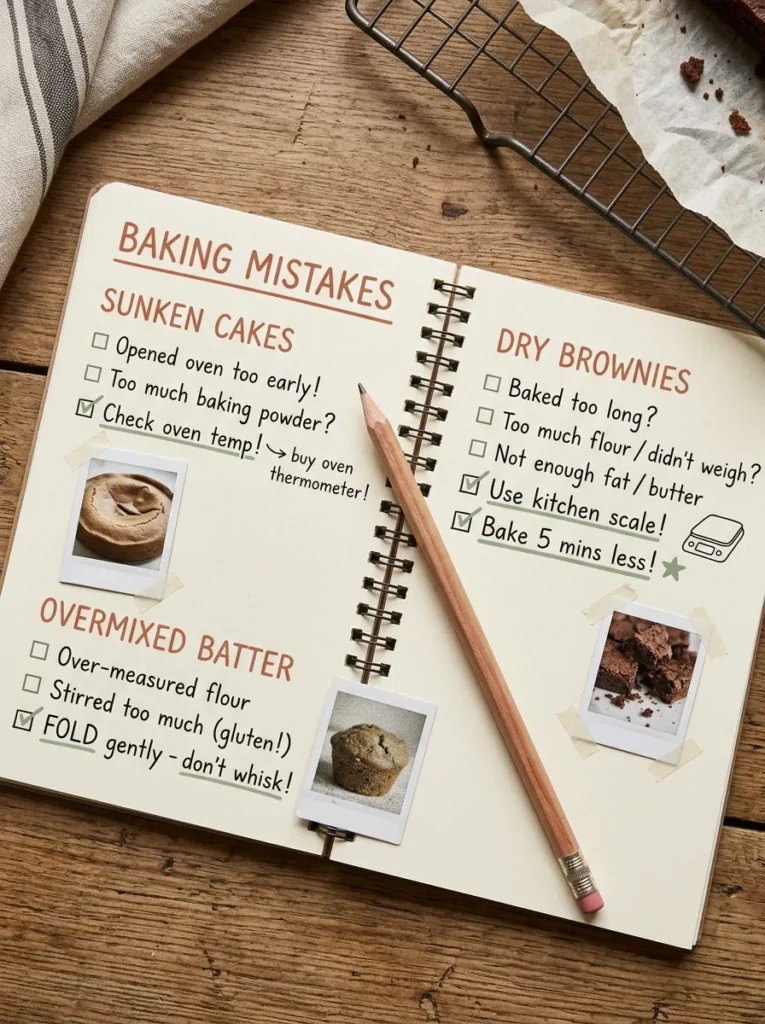
- DO: Record the oven temperature and actual baking time after every attempt.
- DO: Note whether ingredients were measured by weight or volume.
- DO: Photograph unexpected results and write down possible causes.
- DON’T: Change several ingredients at once when troubleshooting.
- DON’T: Judge a cake’s doneness by color alone.
- DON’T: Repeat a failed method without checking your previous notes.
A mistake tracker turns disappointing bakes into practical lessons. Record what happened, what you suspect caused it, and the adjustment you plan to test next time. For example, a sunken cake might need a longer bake or a closer look at leavening measurements. Test one correction at a time to make your notes more useful.
Ingredients
For a simple vanilla cake:
- 1 1/2 cups all-purpose flour
- 1 teaspoon baking powder
- 1/4 teaspoon salt
- 1/2 cup softened unsalted butter
- 3/4 cup sugar
- 2 large eggs
- 1 teaspoon vanilla extract
- 1/2 cup milk
How to Make It
- Preheat the oven to 350°F (175°C) and grease an 8-inch cake pan.
- Whisk the flour, baking powder, and salt together.
- Beat the butter and sugar until fluffy, then add the eggs and vanilla.
- Add the dry ingredients alternately with the milk, mixing just until combined.
- Pour into the pan and bake for 25 to 30 minutes, checking the center with a toothpick.
- Cool the cake and record its height, texture, and any problems you notice.
Baking Journal Starter Kit
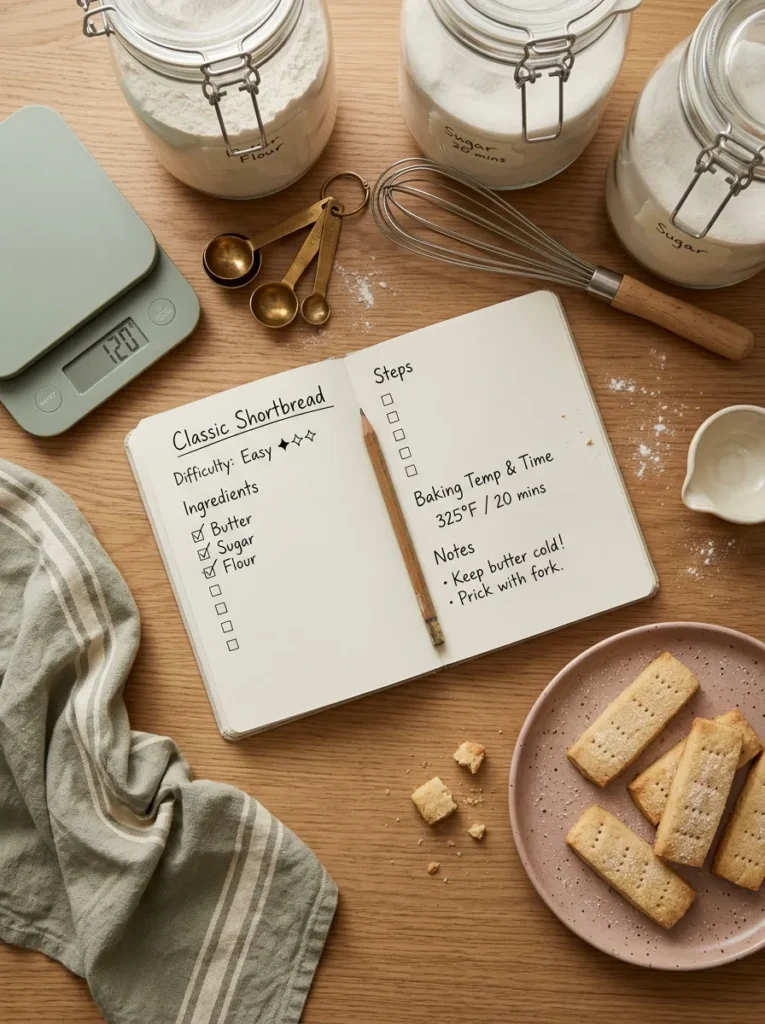
Cost: Low if you use an existing notebook.
Time: About 30 minutes to prepare the first pages.
Skill Level: Beginner.
Best For: New bakers, home cooks, and anyone organizing favorite recipes.
Starting a recipe journal does not require expensive stationery or elaborate lettering. Begin with a notebook, a reliable pen, and a simple page template that records ingredients, oven temperature, baking time, and your final rating. Leave a little room for changes so your journal grows naturally as you gain experience.
Ingredients
For simple homemade shortbread:
- 1 cup all-purpose flour
- 1/2 cup softened unsalted butter
- 1/4 cup powdered sugar
- 1/4 teaspoon vanilla extract
- A small pinch of salt
How to Make It
- Preheat the oven to 325°F (165°C) and line a baking tray with parchment paper.
- Beat the butter and powdered sugar until smooth.
- Mix in the vanilla, flour, and salt until a soft dough forms.
- Roll the dough to about 1/4 inch thick and cut into small shapes.
- Arrange on the tray and bake for 12 to 16 minutes, until the edges are lightly golden.
- Cool completely, taste, and use the bake to complete your first journal entry.
Brownie Texture Notes
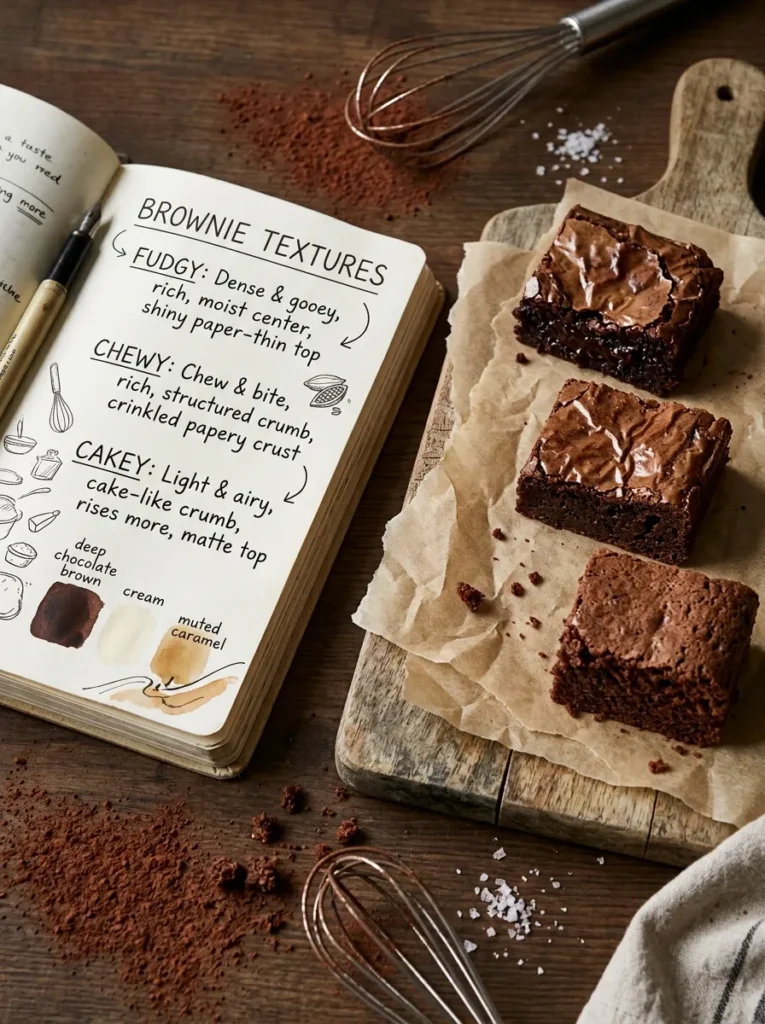
Two brownie recipes can use similar ingredients yet produce very different results. Reserve a journal spread for recording the center texture, crust formation, sweetness, and cooling time. These notes help you decide whether to adjust mixing, baking duration, or the chocolate-to-flour balance when developing your favorite brownie recipe.
Ingredients
- 1/2 cup unsalted butter
- 1 cup granulated sugar
- 2 large eggs
- 1 teaspoon vanilla extract
- 1/3 cup unsweetened cocoa powder
- 1/2 cup all-purpose flour
- 1/4 teaspoon salt
- 1/2 cup chocolate chips, optional
How to Make It
- Preheat the oven to 350°F (175°C). Line an 8-inch square pan with parchment paper.
- Melt the butter and let it cool slightly.
- Whisk in the sugar, eggs, and vanilla until combined.
- Fold in the cocoa powder, flour, and salt. Stir in the chocolate chips if using.
- Spread the batter evenly in the prepared pan.
- Bake for 20 to 25 minutes. A toothpick should show moist crumbs rather than completely wet batter.
- Cool before cutting, then record the texture and baking time in your journa
Bread Proofing Diary

- Record the room temperature and time when mixing the dough.
- Note the first rise and how much the dough expands.
- Track the time between shaping and baking.
- Photograph the dough before and after proofing.
- Write down the final crust, crumb, and flavor observations.
Bread dough responds to temperature, flour type, and fermentation time, so keeping a proofing diary helps you recognize useful patterns. Mark whether the dough doubled, felt airy, or resisted shaping. After several bakes, these records can help you judge readiness more confidently instead of relying entirely on a fixed timer.
Ingredients
- 3 cups bread flour
- 1 cup warm water
- 2 teaspoons instant yeast
- 1 tablespoon sugar
- 1 teaspoon salt
- 1 tablespoon olive oil
How to Make It
- Combine the warm water, yeast, and sugar in a mixing bowl.
- Add the flour, salt, and olive oil. Mix until a dough forms.
- Knead for 8 to 10 minutes until smooth and elastic.
- Cover and let rise in a warm place until doubled, usually 60 to 90 minutes.
- Shape into a loaf and place in a greased loaf pan. Let rise again until puffy.
- Bake at 375°F (190°C) for 30 to 35 minutes, until golden and cooked through.
- Cool before slicing, then record the rise times and bread texture.
Ingredient Substitution Records
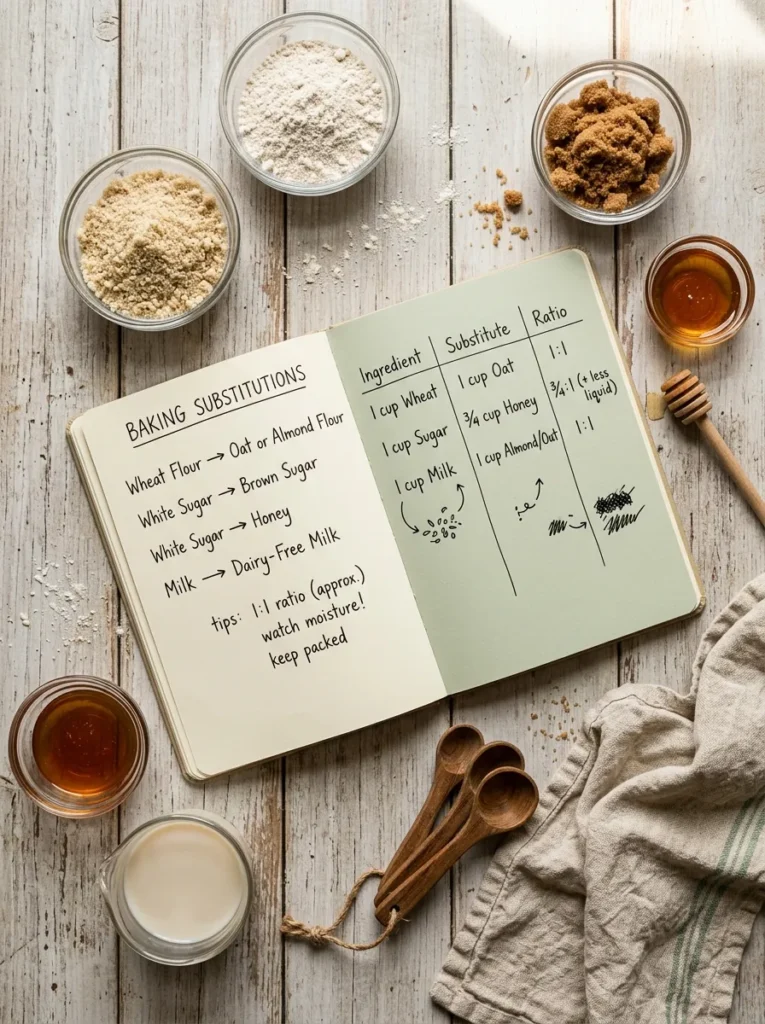
- Original ingredient: Record the exact ingredient and quantity in the recipe.
- Replacement: Write the substitute and its measured amount.
- Purpose: Note whether the change is for flavor, availability, or dietary preference.
- Result: Record moisture, texture, browning, and taste after baking.
Substitution notes are particularly useful when a recipe calls for an ingredient you have run out of. However, not every replacement works in equal amounts. Changing flour, sugar, eggs, or fat can affect structure and moisture, so test substitutions carefully and record the exact result rather than assuming the same outcome every time.
Ingredients
For simple banana muffins using a flour substitution test:
- 1 cup all-purpose flour
- 1 cup oat flour
- 2 ripe bananas, mashed
- 1 large egg
- 1/3 cup granulated sugar
- 1/4 cup vegetable oil
- 1 teaspoon baking powder
- 1/2 teaspoon baking soda
- 1 teaspoon vanilla extract
How to Make It
- Preheat the oven to 350°F (175°C) and line a muffin pan.
- Whisk the egg, sugar, oil, mashed bananas, and vanilla together.
- In a separate bowl, combine the flour, baking powder, and baking soda.
- Stir the dry ingredients into the banana mixture until just combined.
- Divide the batter between the muffin cups.
- Bake for 18 to 22 minutes, until a toothpick inserted in the center comes out clean.
- Cool and record how the oat flour affects the muffins’ moisture, flavor, and crumb compared with your usual version.
Baking Time Reference Pages
BEFORE
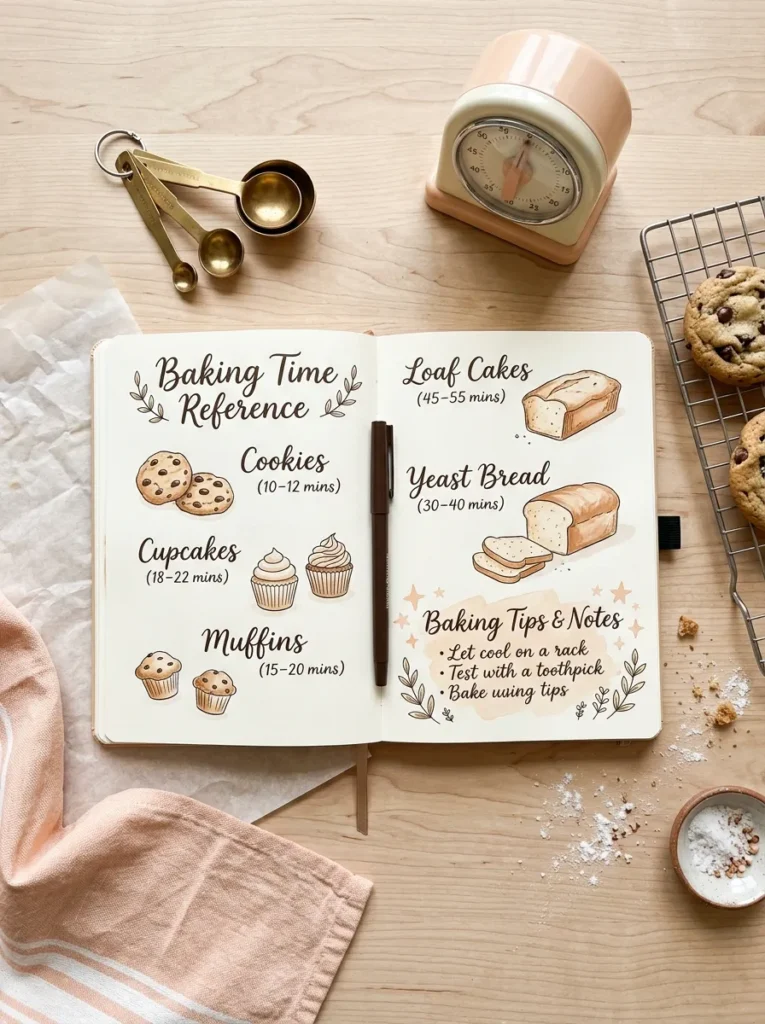
Without a reference page, finding the right baking time often means searching through several recipes or relying on memory. This can be frustrating when you’re preparing different treats for the same gathering.
AFTER
A dedicated timing page keeps your tested temperatures, approximate baking windows, and doneness cues together. You can quickly consult your notes before preparing the next batch.
Create separate entries for cookies, muffins, cakes, and loaves. Record the pan size and oven temperature alongside the time because both affect how quickly baked goods cook. Treat your chart as a starting point, not a guarantee, and check for doneness using recipe-specific cues rather than the timer alone.
Ingredients
For a small batch of vanilla cupcakes:
- 1 cup all-purpose flour
- 1/2 cup granulated sugar
- 1 teaspoon baking powder
- 1/4 teaspoon salt
- 1/4 cup softened unsalted butter
- 1 large egg
- 1/2 teaspoon vanilla extract
- 1/2 cup milk
How to Make It
- Preheat the oven to 350°F (175°C) and line a muffin pan with six cupcake liners.
- Mix the flour, sugar, baking powder, and salt in a bowl.
- Add the butter, egg, vanilla, and milk. Mix until the batter is smooth, without overmixing.
- Divide the batter evenly among the liners.
- Bake for 16 to 20 minutes, checking for a springy top and a clean toothpick.
- Cool the cupcakes and record the actual baking time, oven setting, and doneness cues for future reference.
Pastry Dough Experiment Pages

A flaky pastry depends on more than the ingredient list. Recording dough temperature, chilling periods, rolling thickness, and baking results helps you understand which techniques produce crisp, tender layers. Keep notes about whether the butter stayed cold and whether the pastry shrank during baking. These observations are especially useful when practicing homemade turnovers, tarts, and savory pastries.
Ingredients
- 1 1/4 cups all-purpose flour
- 1/2 cup cold unsalted butter, cubed
- 1/4 teaspoon salt
- 4 to 6 tablespoons ice-cold water
How to Make It
- Mix the flour and salt in a bowl.
- Cut in the cold butter until the mixture resembles coarse crumbs with some pea-sized pieces remaining.
- Add ice water one tablespoon at a time until the dough just holds together.
- Shape into a flat disc, wrap, and refrigerate for at least 30 minutes.
- Roll the chilled dough on a lightly floured surface and fold it into thirds.
- Chill again before using it for tarts or turnovers. Bake according to the chosen recipe.
- Record the dough’s handling, flakiness, and any shrinkage in your journal.
Flour Type Comparison Charts
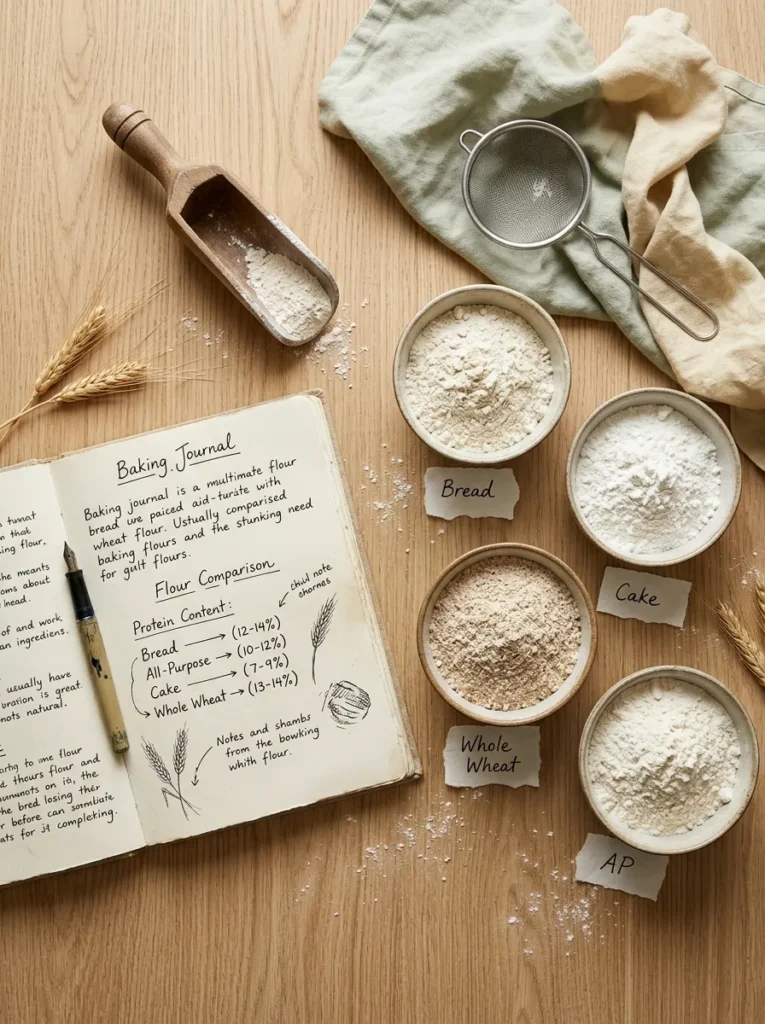
| Comparison Point | All-Purpose Flour | Whole Wheat Flour |
| Texture | Usually softer in many cakes and cookies | Often denser and more substantial |
| Flavor | Mild and neutral | Nutty and earthy |
| Absorption | Varies by recipe | Often absorbs more liquid |
| Useful Notes | Record spread and tenderness | Record moisture and crumb |
Flour comparisons become more meaningful when you bake the same recipe with measured quantities and consistent conditions. Record the flour brand, weight, liquid amount, and final texture so you can identify patterns. Since whole wheat flour absorbs liquid differently, some recipes may need adjustments. Your journal can become a practical reference for choosing flour confidently.
Ingredients
For a simple flour comparison loaf:
- 2 cups all-purpose flour
- 2 cups whole wheat flour
- 2 teaspoons instant yeast
- 1 1/2 cups warm water, approximately
- 1 tablespoon olive oil
- 1 teaspoon salt
- 1 teaspoon sugar
How to Make It
- Divide the flour into two equal test portions, using one type for each batch.
- Mix each flour portion with half the yeast, water, oil, salt, and sugar.
- Knead each dough separately until smooth, adding water gradually if needed.
- Cover and let each dough rise until noticeably expanded.
- Shape the doughs into small loaves and allow a second rise.
- Bake at 375°F (190°C) until the loaves are golden and sound hollow when tapped.
- Cool fully, then compare the crumb, flavor, moisture, and rise. Record any differences.
Frosting Consistency Guide
DO
- Record the butter temperature before mixing frosting.
- Note the powdered sugar and liquid quantities.
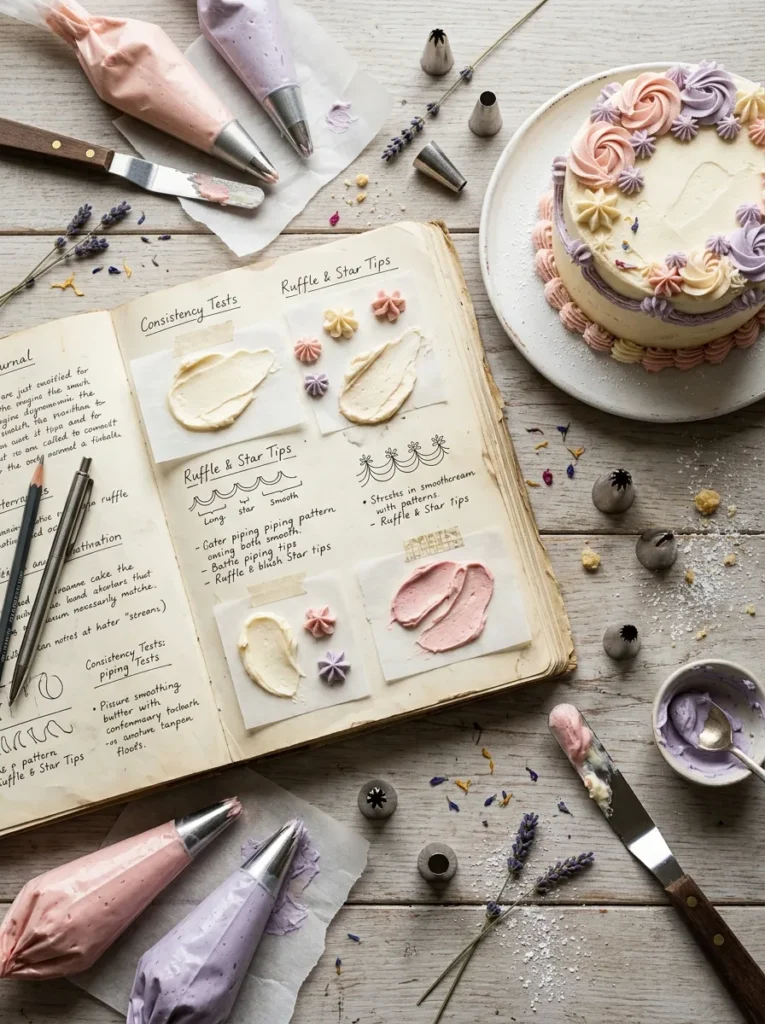
- Test piping shapes on parchment before decorating a cake.
- Photograph the finished texture and write down any adjustments.
DON’T
- Add all the milk at once when thinning frosting.
- Use warm butter that has become oily or melted.
- Judge consistency only by appearance in the mixing bowl.
- Forget to note room temperature during decorating.
Frosting notes help you recreate smooth finishes and stable piped designs. A little extra liquid can make buttercream too loose, while too much powdered sugar can make it overly stiff. Record each adjustment in small amounts, then test the frosting with a spatula or piping tip before applying it to a finished cake.
Ingredients
- 1/2 cup softened unsalted butter
- 2 cups powdered sugar
- 1 teaspoon vanilla extract
- 1 to 2 tablespoons milk
- A small pinch of salt
How to Make It
- Beat the softened butter until smooth and creamy.
- Add the powdered sugar gradually, mixing at low speed.
- Stir in the vanilla and salt.
- Add milk a little at a time until the frosting reaches a spreadable consistency.
- Beat briefly until fluffy, scraping down the bowl as needed.
- Test a small amount with a spatula or piping tip.
- Record the consistency, adjustments, and piping results in your journal.
Homemade Granola Bar Records
Cost: Budget-friendly when using pantry staples.
Time: About 15 minutes of preparation and 20 to 25 minutes of baking.
Skill Level: Beginner.
Best For: Breakfast prep, lunchboxes, and homemade snack collections.
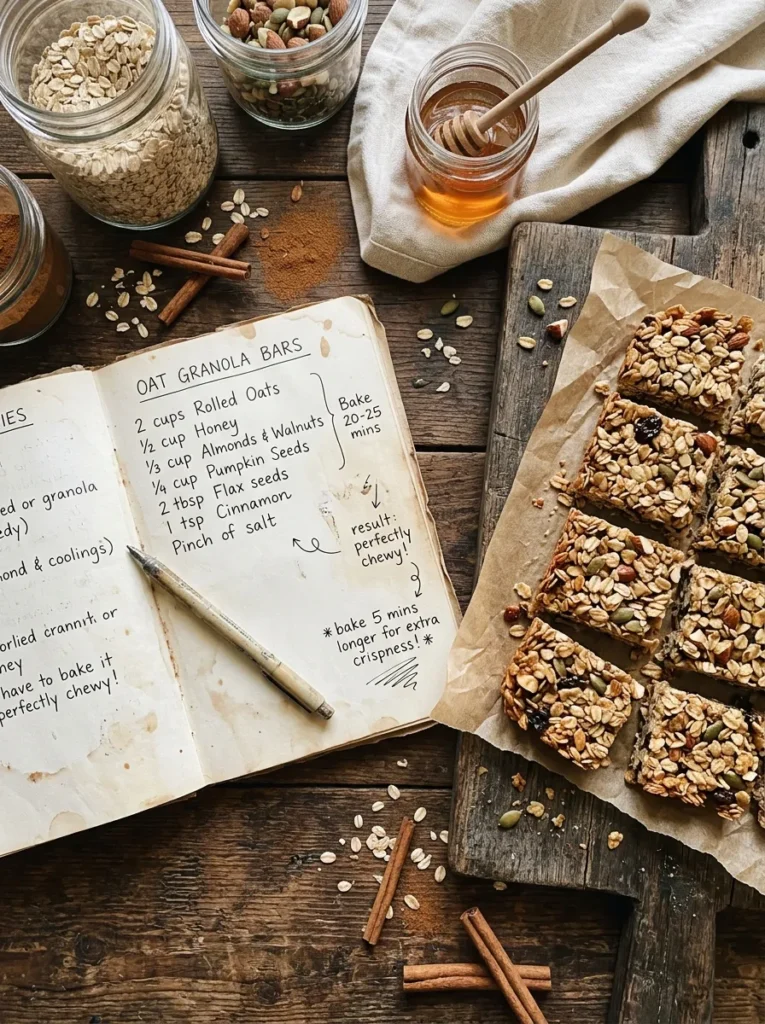
Granola bars are useful additions to a baking journal because small changes can affect how well they hold together. Record the ratio of oats to binding ingredients, the type of sweetener, and the cooling time before slicing. If a batch crumbles, note whether the mixture needed more binding or a firmer press into the pan.
Ingredients
- 2 cups rolled oats
- 1/2 cup chopped almonds
- 1/3 cup honey
- 1/4 cup creamy peanut butter
- 1/4 cup mini chocolate chips
- 1/2 teaspoon vanilla extract
- A pinch of salt
How to Make It
- Preheat the oven to 325°F (165°C) and line an 8-inch square pan with parchment paper.
- Spread the oats and almonds on a baking tray and toast for 5 to 8 minutes, if desired.
- Warm the honey and peanut butter together until easy to stir. Mix in the vanilla and salt.
- Combine the wet mixture with the oats and almonds until evenly coated.
- Let the mixture cool slightly, then fold in the chocolate chips.
- Press firmly into the prepared pan and bake for 15 to 20 minutes.
- Cool completely before slicing. Record the firmness, sweetness, and whether the bars hold together.
Pie Crust Troubleshooting Charts
| Baking Problem | Possible Cause |
| Crust feels tough | Too much mixing or excess water |
| Dough cracks while rolling | Dough may be too dry or too cold |
| Crust shrinks in the oven | Insufficient resting time or stretched dough |
| Bottom crust stays pale | Pan placement or filling moisture may affect browning |
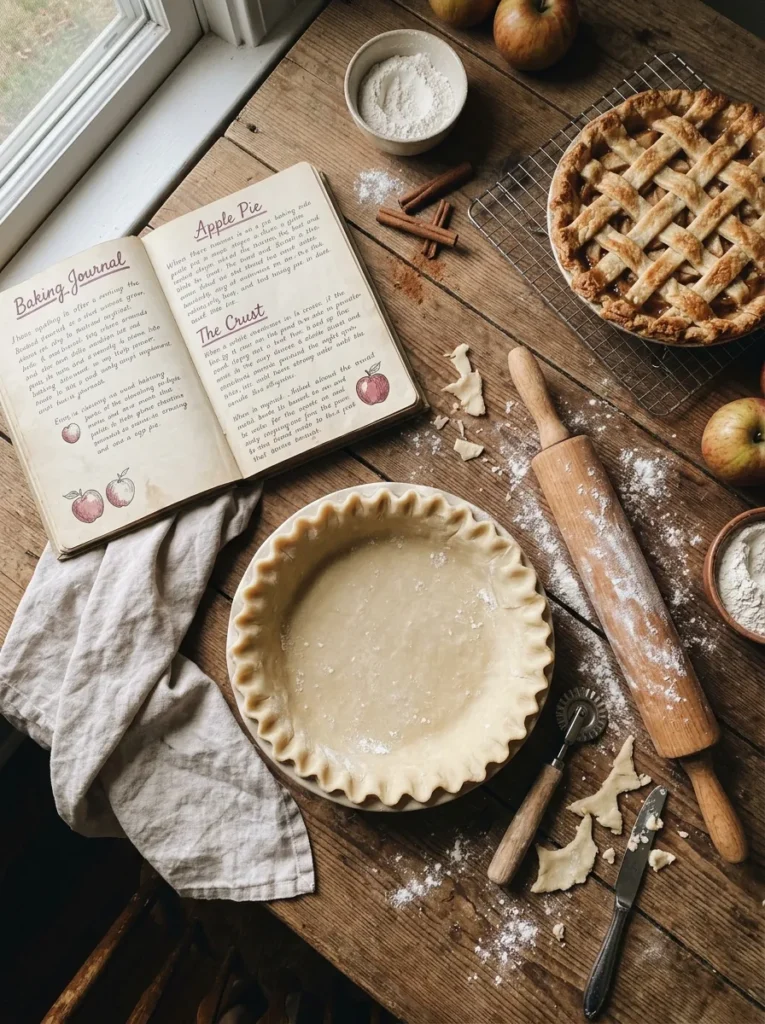
A troubleshooting chart makes pastry practice less frustrating because it connects common problems with possible causes. Write down the flour quantity, water added, chilling time, and pan type each time you make a crust. These details help you identify patterns and decide which adjustment to test on your next pie.
Ingredients
- 1 1/4 cups all-purpose flour
- 1/2 cup cold unsalted butter, cubed
- 1/4 teaspoon salt
- 4 to 6 tablespoons ice-cold water
- 2 medium apples, peeled and sliced
- 2 tablespoons sugar
- 1/2 teaspoon ground cinnamon
- 1 teaspoon lemon juice
How to Make It
- Combine the flour and salt in a bowl. Cut in the cold butter until coarse crumbs form.
- Add ice water gradually until the dough holds together. Shape into a disc and chill for 30 minutes.
- Toss the apple slices with sugar, cinnamon, and lemon juice.
- Roll the pastry and line a small pie dish. Add the apple filling.
- Fold or crimp the edges, then cut small vents in the top if using a top crust.
- Bake at 375°F (190°C) for about 35 to 45 minutes, until the crust is golden and the filling bubbles.
- Cool before slicing and record the crust texture, browning, and any shrinkage.
Baking Gift Box Planners
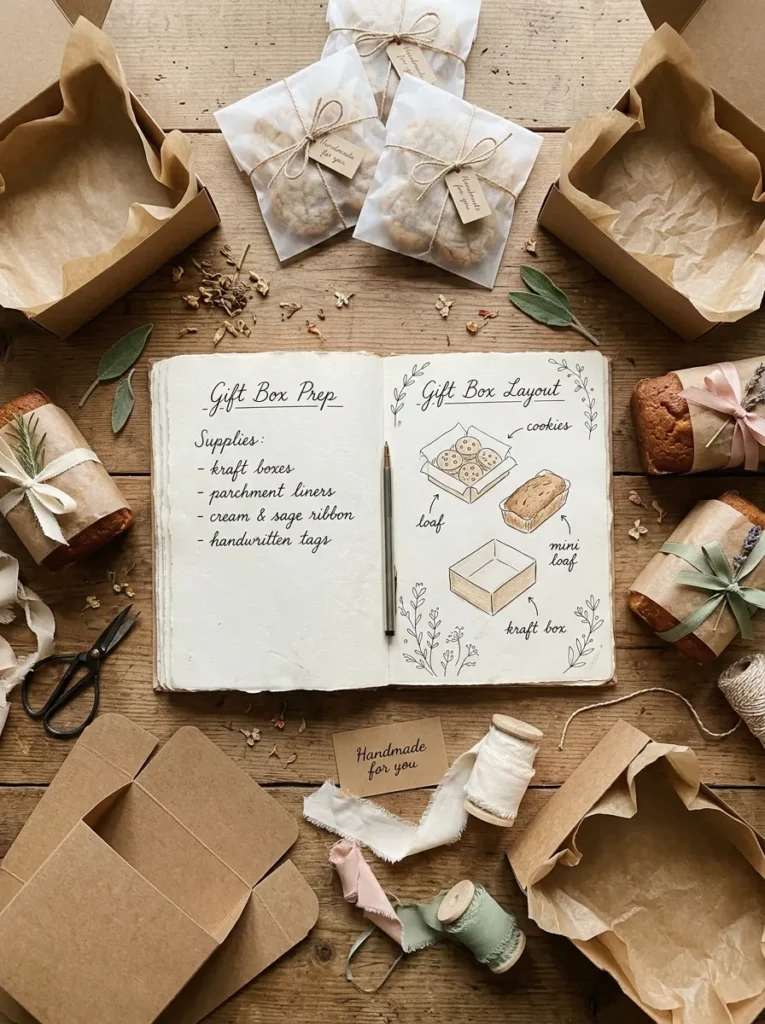
A baking gift box planner helps you match homemade treats with suitable packaging and storage. List each recipe, the number of portions, wrapping materials, and the date you plan to bake. Include allergen notes when sharing food, and check how long each item stays fresh so delicate treats are packed and delivered at their best.
Ingredients
For simple vanilla cookies:
- 1 1/2 cups all-purpose flour
- 1/2 cup softened unsalted butter
- 1/2 cup granulated sugar
- 1 large egg
- 1 teaspoon vanilla extract
- 1/2 teaspoon baking powder
- A pinch of salt
How to Make It
- Preheat the oven to 350°F (175°C) and line a baking tray with parchment paper.
- Beat the butter and sugar until creamy.
- Mix in the egg and vanilla.
- Stir in the flour, baking powder, and salt until a soft dough forms.
- Roll into small balls, place them on the tray, and flatten slightly.
- Bake for 10 to 12 minutes, until the edges are lightly golden.
- Cool completely before packing in a food-safe box. Record the batch yield, packaging needs, and freshness observations in your planner.
Holiday Cookie Countdown
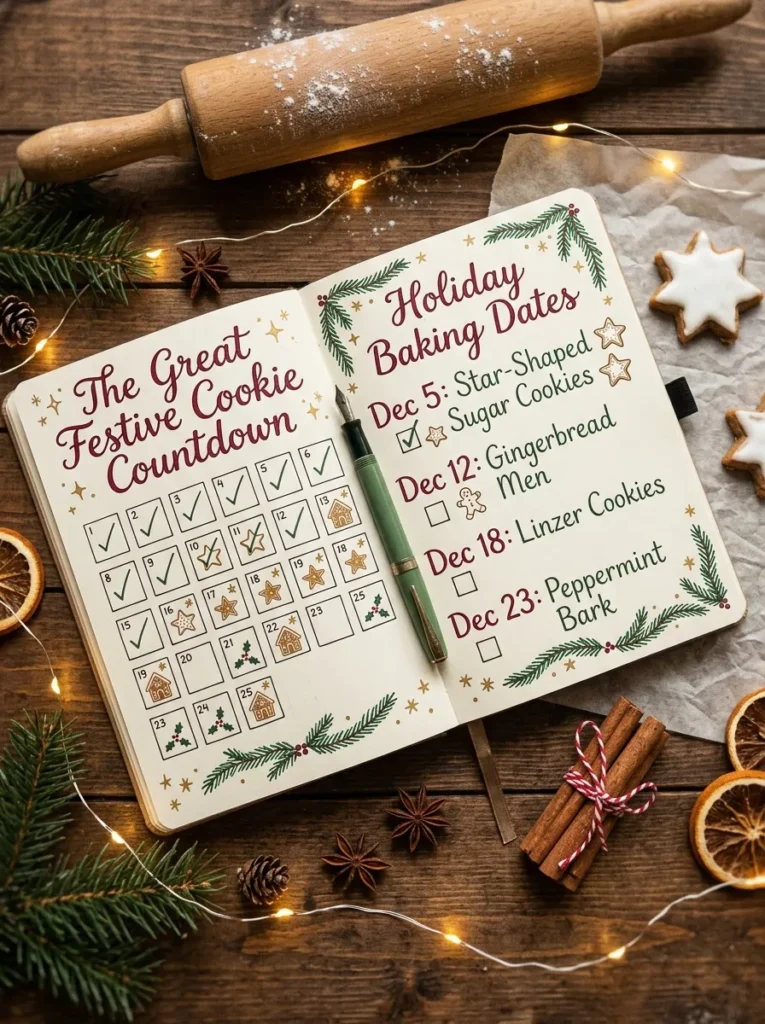
Planning holiday baking becomes easier when recipes are spread across a calendar instead of squeezed into one busy weekend. Mark the days for mixing dough, chilling, baking, decorating, and packaging. Include recipes with different storage needs so you can prepare sturdy cookies early and save delicate decorated treats for closer to the celebration.
Ingredients
- 2 cups all-purpose flour
- 1/2 cup softened unsalted butter
- 3/4 cup brown sugar
- 1 large egg
- 1/4 cup molasses
- 1 teaspoon ground ginger
- 1 teaspoon ground cinnamon
- 1/2 teaspoon baking soda
- 1/4 teaspoon salt
How to Make It
- Preheat the oven to 350°F (175°C) and line two baking sheets with parchment paper.
- Whisk together the flour, ginger, cinnamon, baking soda, and salt.
- Beat the butter and brown sugar until creamy, then add the egg and molasses.
- Stir in the dry ingredients until a dough forms. Chill for at least 30 minutes.
- Roll out the dough and cut into festive shapes.
- Bake for 8 to 10 minutes, depending on cookie size, until the edges are set.
- Cool completely and record the yield, baking time, and decorating schedule on your countdown page.
Personal Baking Rating Scales
Cost: Low, using a notebook and pen.
Time: Five minutes of note-taking after each bake.
Skill Level: Beginner.
Best For: Comparing recipes and deciding which treats deserve a repeat bake.
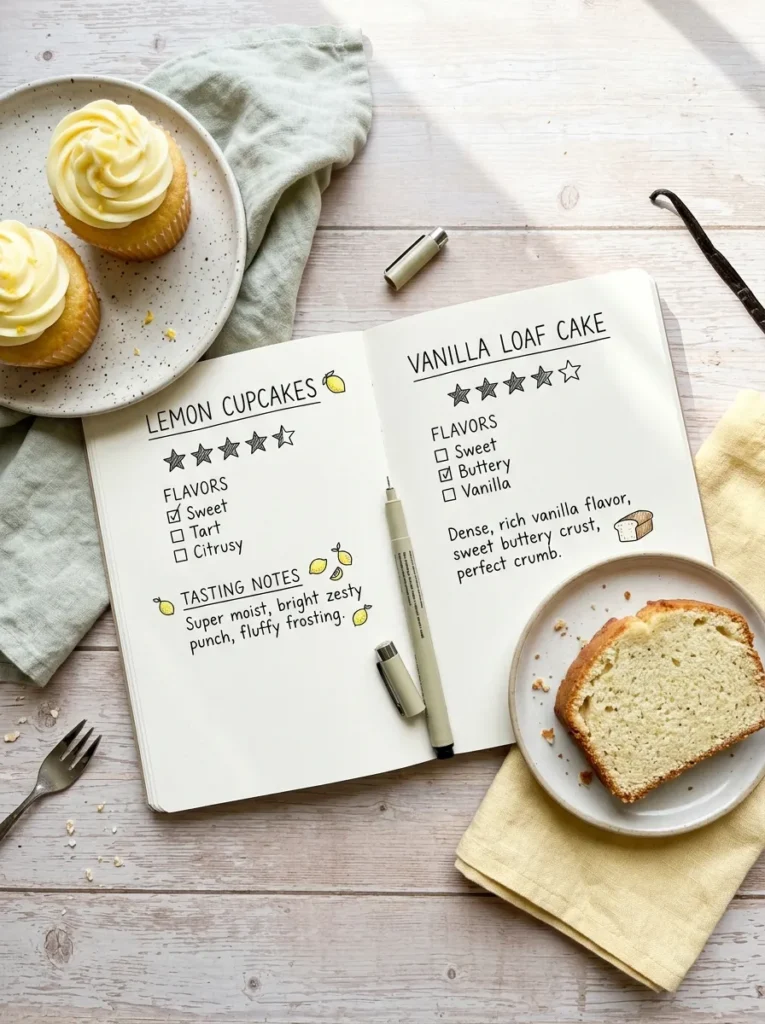
A consistent rating scale helps you compare recipes without relying on vague memories. Score flavor, texture, appearance, preparation effort, and how likely you are to bake the item again. Add one sentence explaining each score, such as “soft center, but slightly too sweet.” Those details make your journal more useful than a page of stars alone.
Ingredients
For simple lemon cupcakes:
- 1 cup all-purpose flour
- 1/2 cup granulated sugar
- 1 teaspoon baking powder
- 1/4 teaspoon salt
- 1/4 cup softened unsalted butter
- 1 large egg
- 1/3 cup milk
- 1 tablespoon lemon juice
- 1 teaspoon lemon zest
How to Make It
- Preheat the oven to 350°F (175°C) and line a six-cup muffin pan.
- Mix the flour, sugar, baking powder, and salt.
- Beat the butter and egg, then add the milk, lemon juice, and zest.
- Stir the wet mixture into the dry ingredients until just combined.
- Divide the batter among the liners and bake for 16 to 20 minutes.
- Cool completely before tasting.
- Rate the cupcakes for flavor, texture, appearance, and ease of preparation. Add one specific improvement for next time.
Recipe Scaling Worksheets
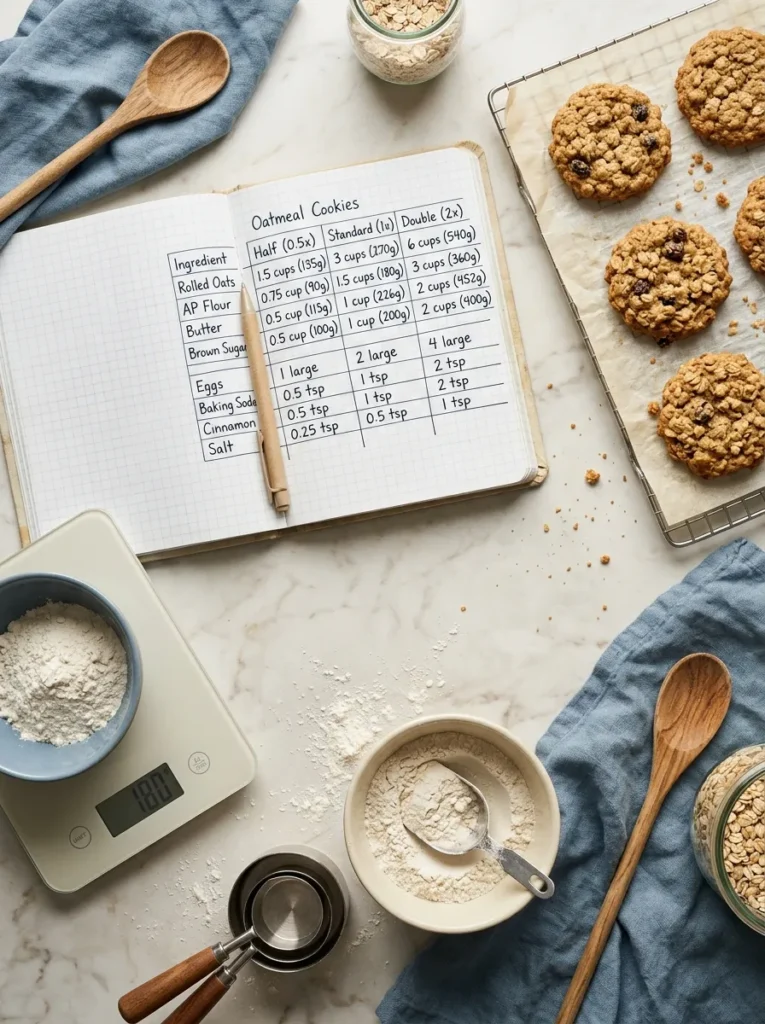
BEFORE
A recipe that serves twelve may produce far too much for a small household. Guessing ingredient quantities can also change the texture, especially when eggs or leavening agents are involved.
AFTER
A scaling worksheet lets you calculate ingredient amounts before mixing. Record the original yield, desired yield, scaling factor, and adjusted quantities for easier planning.
Divide the desired number of servings by the original yield to find the scaling factor. Multiply each ingredient by that number, then check pan size, baking depth, and doneness carefully. Baking times do not always scale proportionally, so note the actual time and result whenever you change a batch size.
Ingredients
For a small oatmeal cookie batch:
- 1 cup rolled oats
- 1/2 cup all-purpose flour
- 1/4 cup softened unsalted butter
- 1/3 cup brown sugar
- 1 small egg
- 1/2 teaspoon baking soda
- 1/2 teaspoon vanilla extract
- A pinch of salt
- 1/4 cup raisins
How to Make It
- Preheat the oven to 350°F (175°C) and line a baking tray.
- Cream the butter and brown sugar together.
- Beat in the egg and vanilla.
- Stir in the oats, flour, baking soda, salt, and raisins.
- Scoop small portions onto the tray and leave space between them.
- Bake for 10 to 12 minutes, until the edges are lightly golden.
- Record the batch yield and ingredient quantities. Use the worksheet to calculate adjusted quantities for your next batch, and verify baking time separately.
Baking Cost Breakdown Sheets
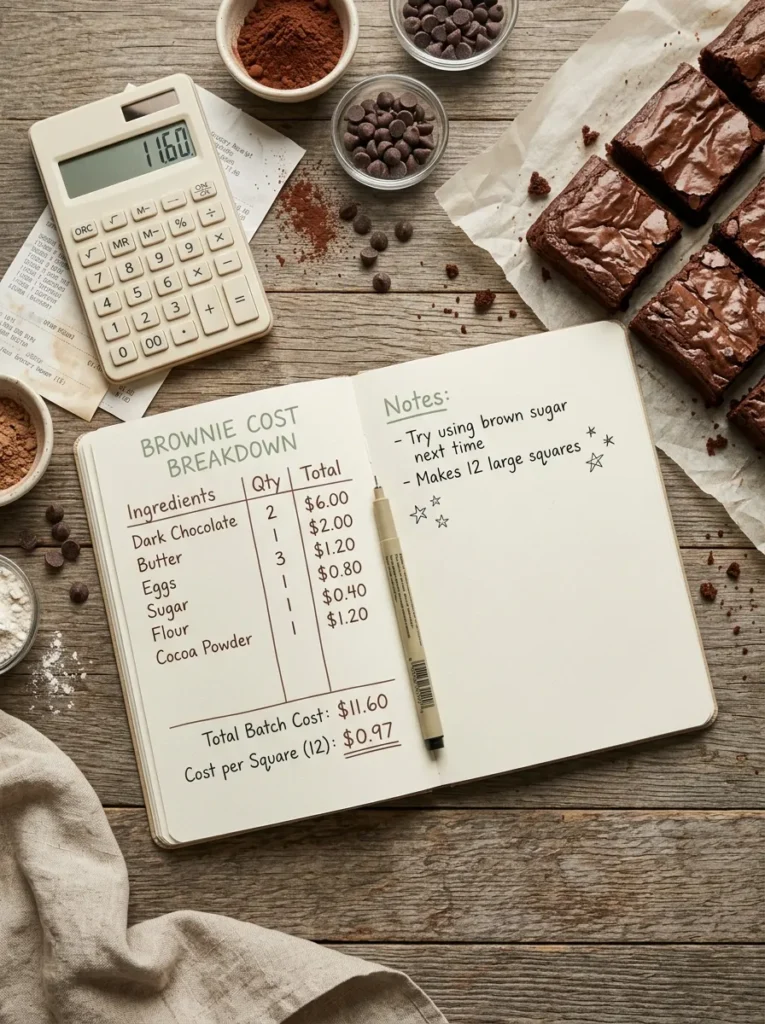
Keeping track of baking costs helps you understand which recipes fit your budget and how much each batch actually costs. Record ingredient prices, quantities used, packaging expenses, and the number of portions produced. This information is especially helpful when preparing treats for parties, gifting homemade desserts, or planning a small home baking business.
Ingredients
- 1/2 cup unsalted butter
- 1 cup granulated sugar
- 2 large eggs
- 1 teaspoon vanilla extract
- 1/3 cup unsweetened cocoa powder
- 1/2 cup all-purpose flour
- 1/4 teaspoon salt
- 1/2 cup chocolate chips
How to Make It
- Preheat the oven to 350°F (175°C) and line an 8-inch square pan with parchment paper.
- Melt the butter and let it cool slightly.
- Whisk in the sugar, eggs, and vanilla extract.
- Fold in the cocoa powder, flour, and salt, then stir in the chocolate chips.
- Spread the batter evenly in the prepared pan.
- Bake for 20 to 25 minutes, until the center is set but still moist.
- Cool and cut into portions. Record the ingredient quantities, current purchase prices, total batch cost, and cost per brownie in your journal.
Cake Layer Planning Pages
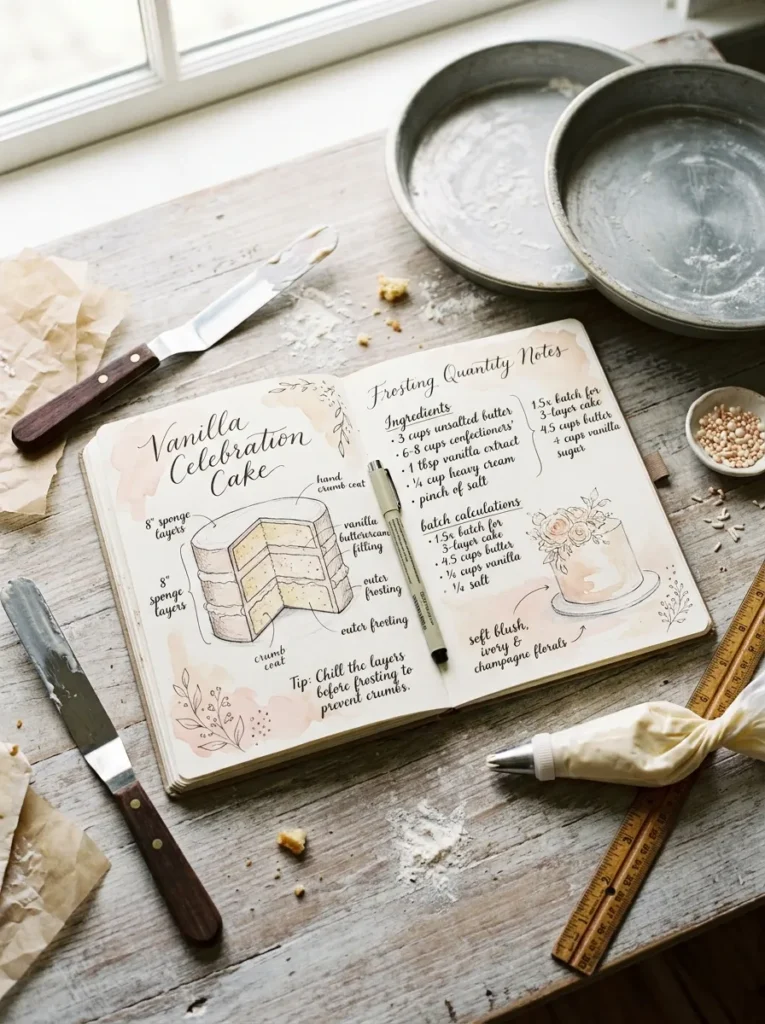
- Layer count: Decide whether the cake needs two, three, or four layers.
- Pan size: Record the diameter and depth of each cake pan.
- Filling amount: Estimate the filling needed between layers.
- Frosting plan: Note the quantities for the crumb coat and final decoration.
- Assembly notes: Record cooling, leveling, stacking, and chilling times.
A layer-planning page keeps cake assembly organized before you start mixing. It is particularly helpful for birthdays and celebrations, when uneven layers or insufficient frosting can cause last-minute stress. Write down the pan size, finished layer height, filling thickness, and decorating plan so you can prepare the right quantities for the next cake.
Ingredients
For a basic two-layer vanilla cake:
- 2 cups all-purpose flour
- 1 1/2 cups granulated sugar
- 2 teaspoons baking powder
- 1/2 teaspoon salt
- 1/2 cup softened unsalted butter
- 2 large eggs
- 2 teaspoons vanilla extract
- 1 cup milk
For a simple buttercream filling:
- 1/2 cup softened unsalted butter
- 2 cups powdered sugar
- 1 to 2 tablespoons milk
- 1 teaspoon vanilla extract
How to Make It
- Preheat the oven to 350°F (175°C). Grease and line two 8-inch round cake pans.
- Whisk the flour, sugar, baking powder, and salt together.
- Add the butter, eggs, vanilla, and milk. Mix until the batter is smooth.
- Divide the batter evenly between the pans.
- Bake for 25 to 30 minutes, checking the centers with a toothpick.
- Cool the cakes completely before leveling or stacking.
- Beat the buttercream ingredients together until smooth, adding milk gradually.
- Spread frosting between the layers, stack the cakes, and record the quantities and assembly details in your journal.
Favorite Recipe Index
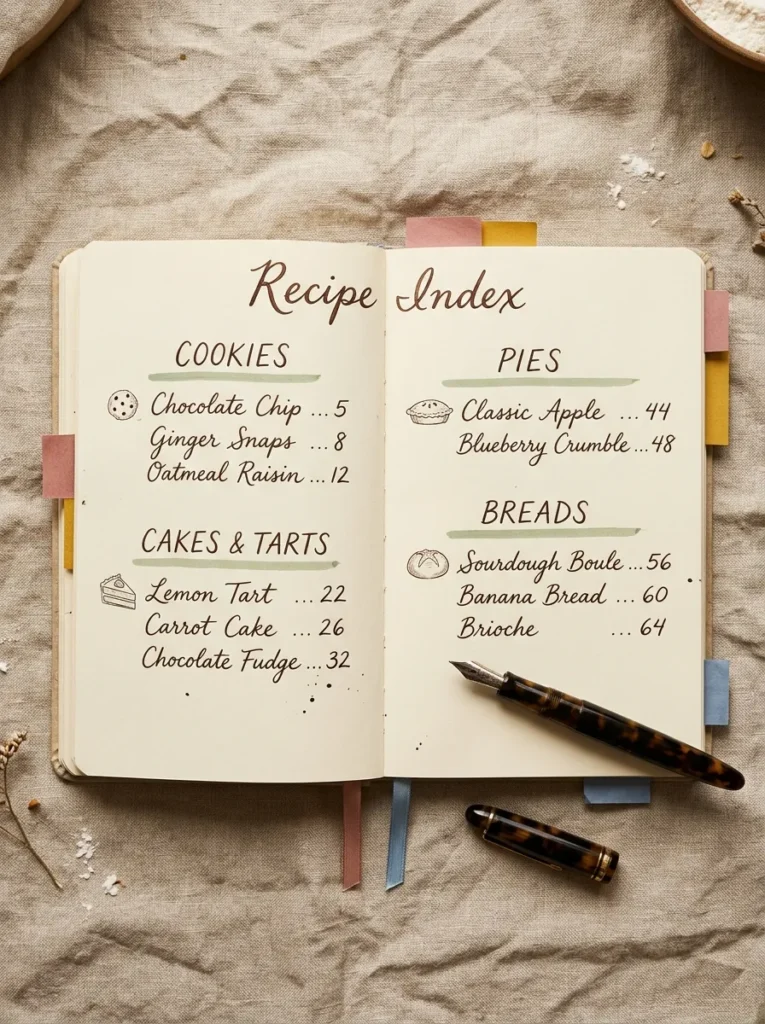
A recipe index makes a growing collection easier to use because your favorite bakes stay easy to find. Group entries by category, such as cookies, cakes, breads, pastries, and breakfast treats. Add page numbers and a small symbol for recipes you have tested successfully. Update the index whenever you add a new recipe so it remains useful over time.
Ingredients
For a simple cinnamon sugar cookie recipe to add to your index:
- 1 1/2 cups all-purpose flour
- 1/2 cup softened unsalted butter
- 1/2 cup granulated sugar
- 1 large egg
- 1 teaspoon vanilla extract
- 1/2 teaspoon baking powder
- 1 teaspoon ground cinnamon
- A pinch of salt
How to Make It
- Preheat the oven to 350°F (175°C) and line a baking sheet with parchment paper.
- Beat the butter and sugar until creamy.
- Add the egg and vanilla, mixing until combined.
- Stir in the flour, baking powder, cinnamon, and salt to form a soft dough.
- Roll the dough into small balls and place them on the baking sheet, leaving space between each.
- Bake for 10 to 12 minutes, until the edges are lightly golden.
- Cool the cookies and add the recipe to your index with its page number, category, and rating.
CONCLUSION
A baking journal can become much more than a collection of recipes. It can hold family traditions, document your baking progress, and help you recreate the treats everyone loves. These Baking Recipe Journal Ideas offer simple ways to organize your recipes, learn from kitchen experiments, and preserve meaningful moments one page at a time.
Start with just one idea and build your journal at your own pace. Save this article on Pinterest for inspiration, try your favorite layout, and share it with a friend who loves baking. Every recipe you record adds another little piece to your personal collection of sweet memories.