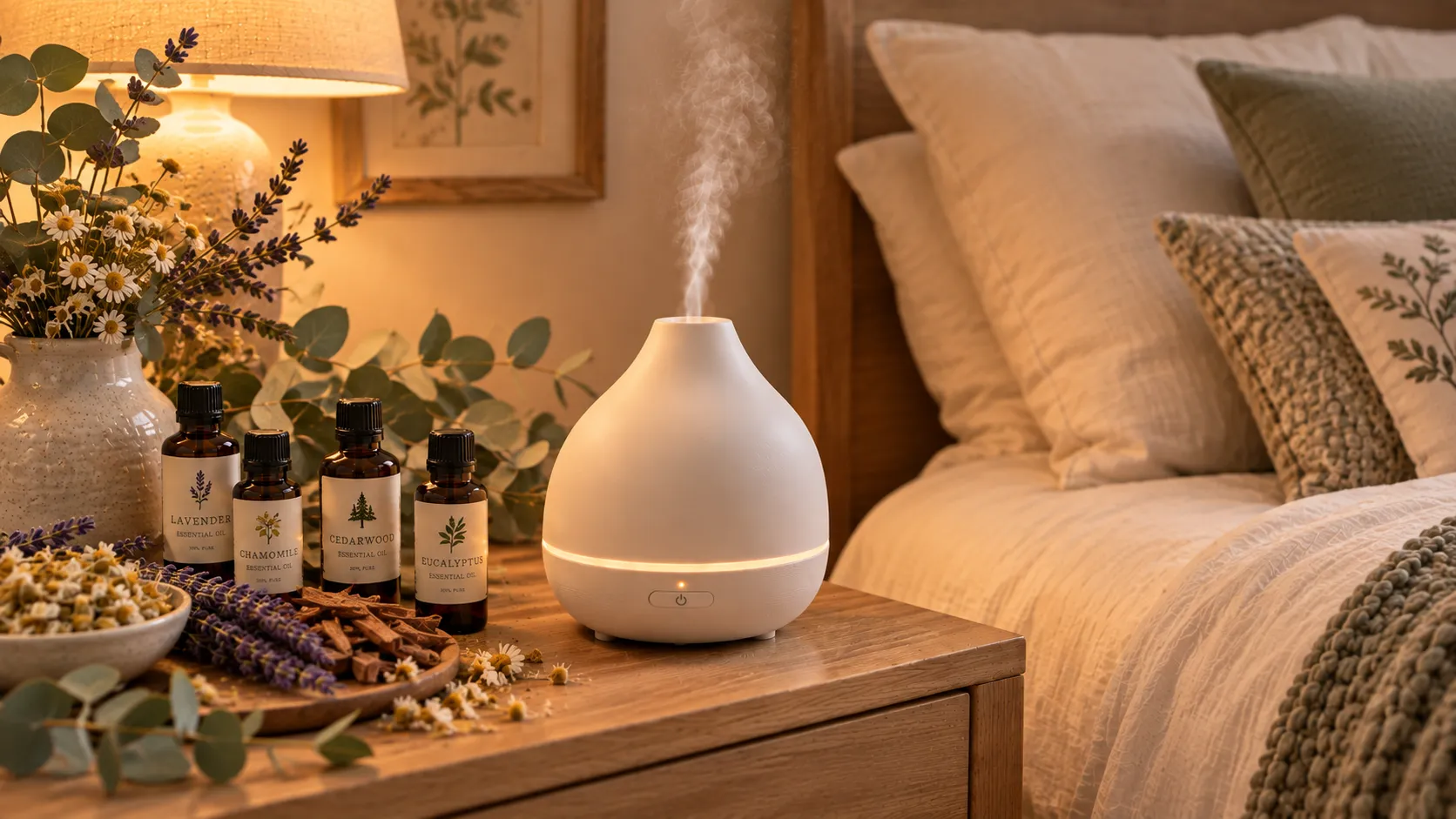
22 Essential Oil Diffuser Recipes for Peaceful Sleep
A calming bedtime atmosphere can start with something as simple as the right scent. When the day feels busy, a gentle diffuser blend can help make your evening routine feel slower and more intentional.
These Essential Oil Diffuser Recipes for Peaceful Sleep bring together simple combinations featuring floral, citrus, herbal, and woody aromas. Whether you prefer soft lavender, warm cedarwood, refreshing eucalyptus, or lightly sweet orange, there is plenty of inspiration to explore. The goal is not to create a complicated routine, but to find scent combinations that make your bedroom feel comfortable and inviting.
I’ve noticed that keeping a diffuser recipe simple makes it much easier to discover which aromas you actually enjoy. Throughout these ideas, you’ll find practical ratios, easy preparation steps, and different scent profiles to help you create a relaxing atmosphere while following your diffuser manufacturer’s instructions. Save your favorites and experiment gently until you find your preferred evening blend.
Lavender Chamomile Blend

A gentle floral aroma can make a bedtime routine feel more settled and consistent. Lavender brings a familiar soft note, while chamomile adds a mild herbal character. The combination suits bedrooms with cream bedding, light wood, and warm lamps. Keep the scent subtle, especially in a small room.
In my experience, simple blends are easier to adjust when you’re learning which aromas you enjoy. Start with a small amount rather than assuming more oil creates a better result. Follow your diffuser’s water and operating instructions, and keep the device positioned away from your pillow and other fabrics.
Ingredients:
- 3 drops lavender essential oil
- 2 drops chamomile essential oil
- Water according to your diffuser manufacturer’s instructions
How to Make:
- Fill the diffuser reservoir to its recommended water line.
- Add the lavender and chamomile essential oils.
- Secure the diffuser lid.
- Operate it according to the manufacturer’s instructions.
ALSO READ : Autumn Recipe Ideas
Sweet Orange Lavender
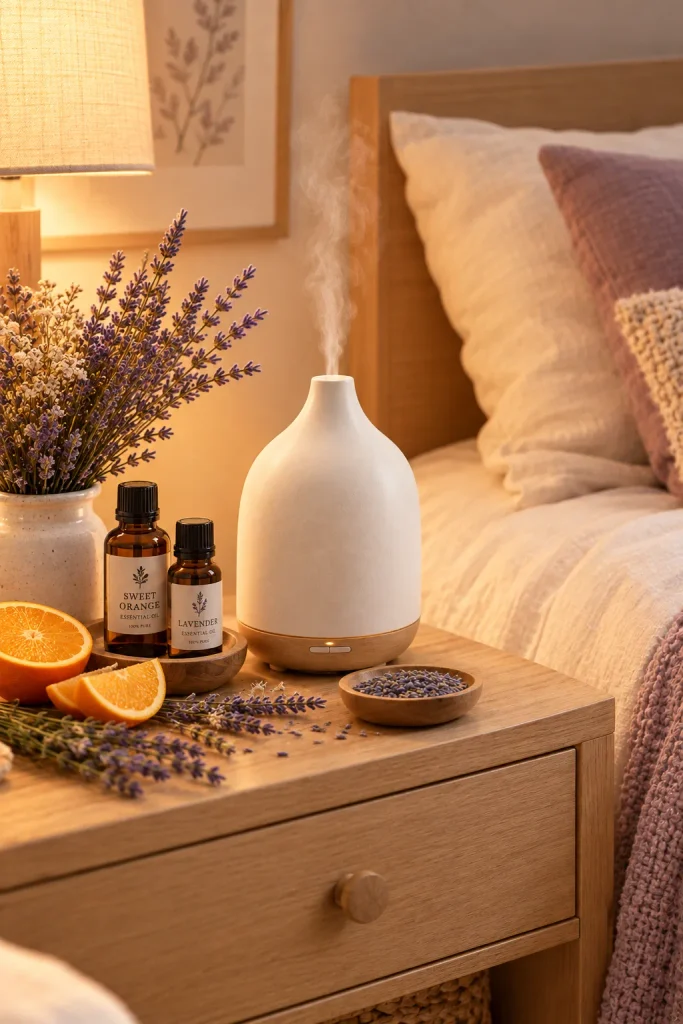
- Ingredients: 3 drops lavender essential oil, 2 drops sweet orange essential oil, and diffuser water according to the manufacturer’s instructions.
- Aroma Balance: Lavender remains the main floral note while sweet orange adds a lighter citrus character.
- Best Timing: Use it during your evening wind-down rather than assuming the diffuser should operate throughout the entire night.
- Room Style: The fresh combination pairs nicely with light wood, cream fabrics, and warm neutral decor.
- Beginner Tip: Start with the listed ratio and adjust future batches only after seeing how your room and personal scent preference respond.
This bright floral blend offers a softer alternative to strongly sweet fragrances. The citrus note keeps the aroma fresh, while lavender provides the main botanical character. I’ve noticed that citrus oils can become noticeable quickly, so keeping the ratio balanced helps prevent the blend from feeling sharp or overpowering in smaller bedrooms.
Ingredients:
- 3 drops lavender essential oil
- 2 drops sweet orange essential oil
- Recommended diffuser water
How to Make:
- Fill the reservoir to the manufacturer’s recommended level.
- Add both essential oils.
- Close the diffuser securely.
- Run it according to the device instructions.
Pinterest Account : FreshRecipeIdeas1
Cedarwood Lavender Mix
Quick Tip:
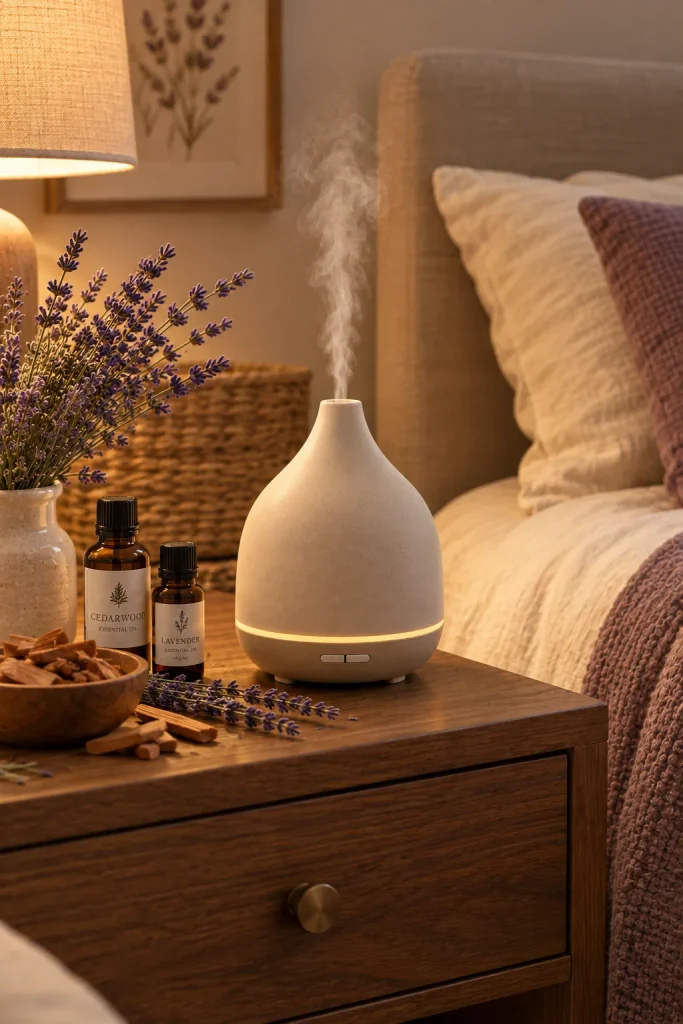
Keep cedarwood slightly lighter than lavender when making your first batch. A 3-to-2 ratio gives the blend a noticeable woody base while allowing the floral note to remain prominent.
The deeper cedarwood aroma gives lavender a warmer, earthy character that suits quiet bedrooms with natural materials. In my experience, woody scents can become dominant quickly, particularly in compact rooms, so starting with five total drops is a practical approach. Adjust only after considering your diffuser size and personal fragrance sensitivity.
Ingredients:
- 3 drops lavender essential oil
- 2 drops cedarwood essential oil
- Water according to your diffuser manufacturer’s instructions
How to Make:
- Fill the diffuser reservoir to the recommended water line.
- Add 3 drops of lavender oil.
- Add 2 drops of cedarwood oil.
- Replace the lid and operate the diffuser according to its instructions.
Vanilla Lavender Blend
BEFORE:
A bedroom may feel comfortable but still have a sharp or overly strong fragrance that distracts during bedtime. Complex scent combinations can also make it difficult to identify which aroma you actually enjoy.
AFTER:
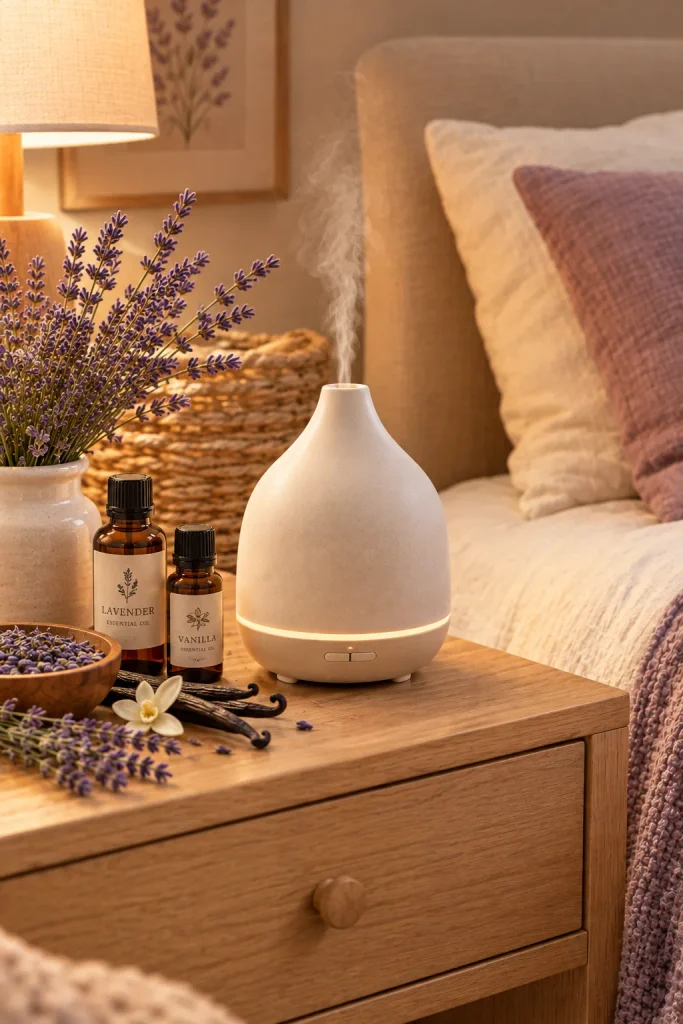
A simple vanilla and lavender combination creates a warmer, softer room fragrance. The floral note stays recognizable while vanilla adds a creamy character. Using only two oils also makes the recipe easy for beginners to repeat and adjust.
The blend works especially well beside warm wood, cream textiles, and soft bedside lighting. Keep the aroma light rather than increasing the oil concentration. Essential oils can irritate some people, so discontinue use if you notice discomfort and follow your diffuser’s specific operating guidance.
Ingredients:
- 3 drops lavender essential oil
- 2 drops vanilla essential oil suitable for diffuser use
- Water according to the diffuser manufacturer’s instructions
How to Make:
- Fill the diffuser reservoir to its recommended water level.
- Add the lavender and vanilla oils.
- Secure the lid properly.
- Operate the diffuser according to the manufacturer’s instructions.
Frankincense Cedarwood Blend
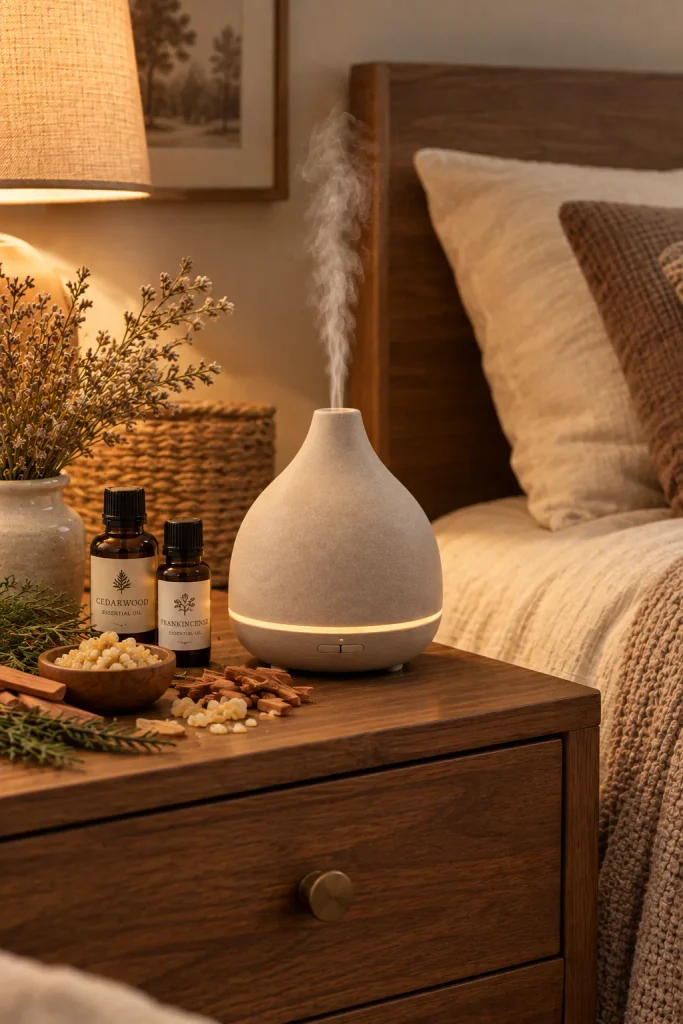
- Fill the reservoir: Add water according to the diffuser manufacturer’s recommended level.
- Add frankincense: Place 2 drops of frankincense essential oil into the water.
- Add cedarwood: Follow with 2 drops of cedarwood essential oil.
- Start gently: Secure the diffuser and operate it according to the manufacturer’s directions.
This earthy pairing creates a deeper aroma than bright citrus or floral recipes. Frankincense brings a warm resinous note, while cedarwood adds a dry wood character. Keep the four-drop ratio as a starting point, especially in a small bedroom, where deeper aromas may become noticeable faster.
Ingredients:
- 2 drops frankincense essential oil
- 2 drops cedarwood essential oil
- Water according to diffuser instructions
How to Make:
Follow the steps above, keeping the diffuser on a stable surface away from bedding and direct contact with your face.
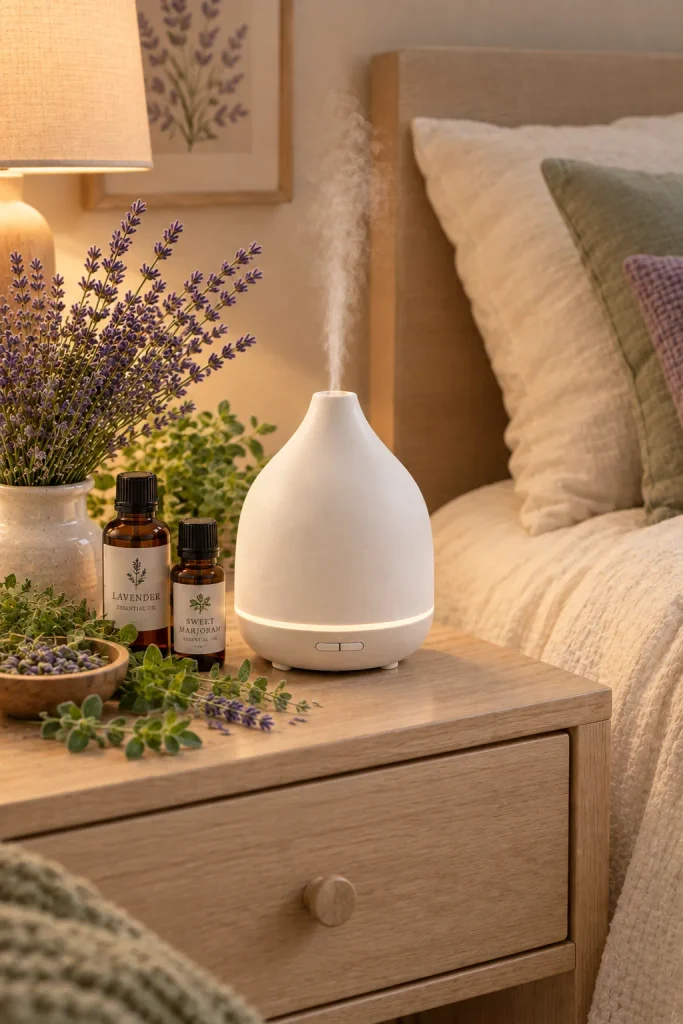
Sweet Marjoram Lavender
| Comparison Point | Option A: Floral | Option B: Herbal |
| Lavender | 3 drops | 2 drops |
| Sweet Marjoram | 1 drop | 2 drops |
| Aroma | Softer and floral | More herbal and earthy |
| Best For | Light scent preferences | Deeper botanical aromas |
The floral version keeps lavender at the center, while the herbal version gives sweet marjoram more presence. For a first batch, the lighter ratio is easier to assess. Essential oils vary in strength, so your preferred balance may depend on the diffuser size, room ventilation, and individual sensitivity.
Ingredients:
- 2 to 3 drops lavender essential oil
- 1 to 2 drops sweet marjoram essential oil
- Water according to your diffuser manufacturer’s instructions
How to Make:
- Fill the diffuser to its recommended water line.
- Select either ratio from the comparison table.
- Add the oils to the water.
- Close the diffuser and operate it according to the manufacturer’s instructions.
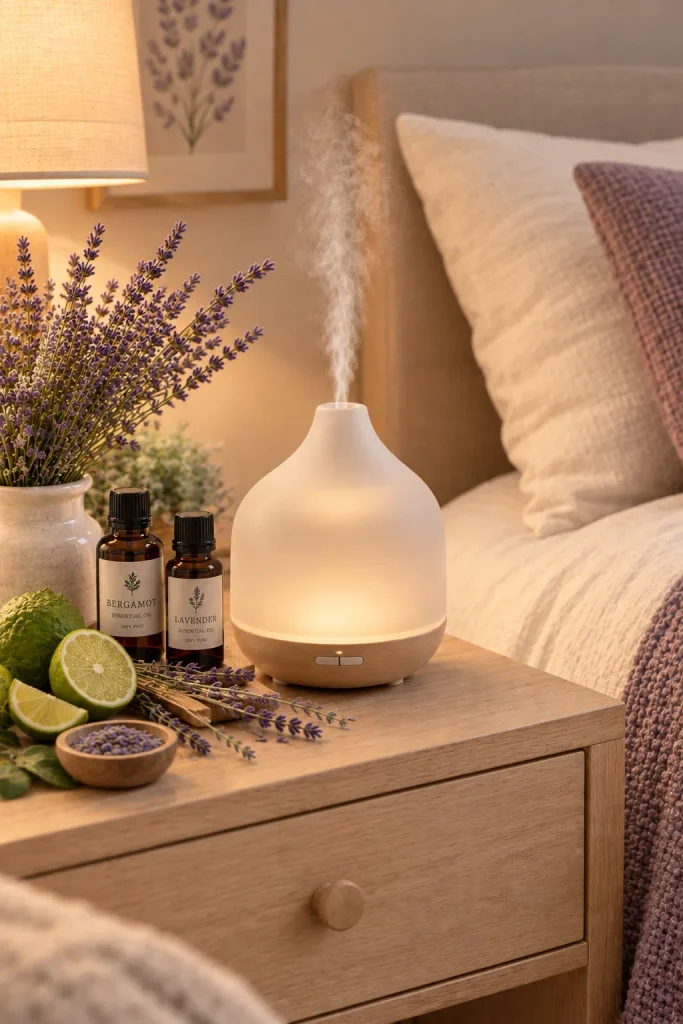
Bergamot Lavender Blend
DO:
- Use 3 drops lavender essential oil with 2 drops bergamot essential oil.
- Fill the diffuser only to its recommended water level.
- Place the diffuser on a stable, dry bedside surface.
- Run it according to the manufacturer’s operating instructions.
DON’T:
- Don’t add extra drops simply to make the aroma stronger.
- Don’t place the diffuser directly beside your pillow.
- Don’t let the mist wet bedding, books, or electronics.
- Don’t use the blend if the fragrance causes irritation or discomfort.
This bright floral combination gives lavender a fresh citrus edge without requiring several different oils. Bergamot can be especially noticeable in a smaller room, so the five-drop starting ratio keeps the aroma manageable. Check your product labels and diffuser guidance before use, particularly if you have known fragrance sensitivities.
Ingredients:
- 3 drops lavender essential oil
- 2 drops bergamot essential oil
- Water according to diffuser instructions
How to Make:
- Fill the diffuser reservoir to the marked water line.
- Add the lavender and bergamot oils.
- Replace the lid securely.
- Operate the diffuser as directed by the manufacturer.
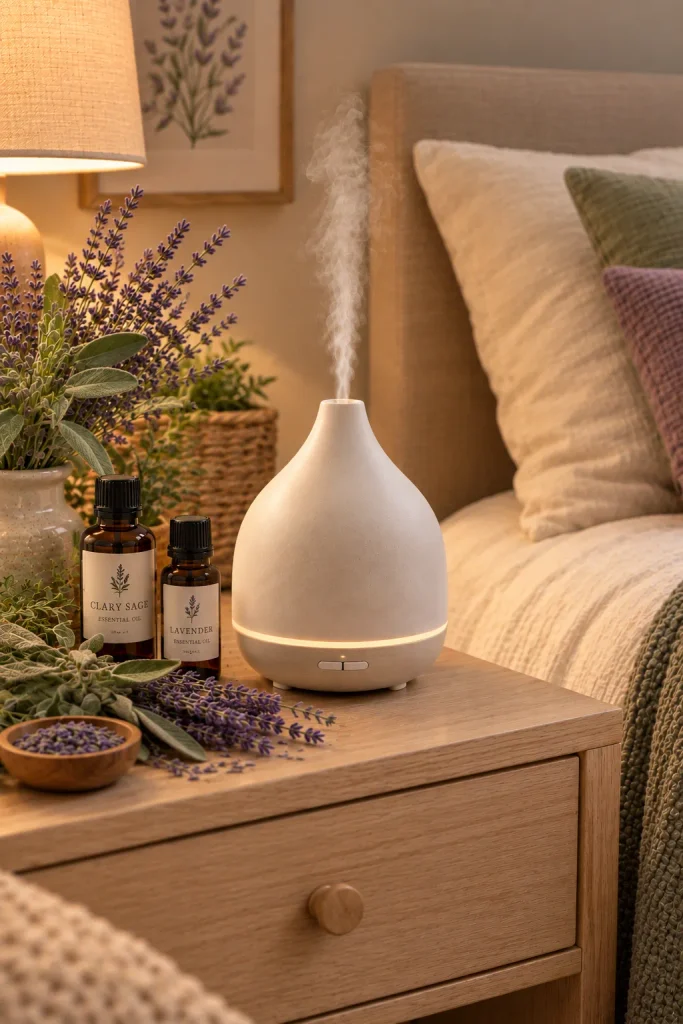
Clary Sage Lavender
Cost: Low | Time: 2 minutes | Skill Level: Beginner
Best For: Floral-herbal scent preferences | Works In: Bedrooms and reading corners
Result: Soft botanical aroma | Difficulty: Very easy
A balanced floral-herbal combination can keep your bedtime routine simple. Use 2 drops of clary sage with 3 drops of lavender for a gentle starting ratio. The lavender remains prominent while clary sage adds a green, herbaceous layer that feels less sweet than citrus or vanilla blends.
Ingredients:
- 3 drops lavender essential oil
- 2 drops clary sage essential oil
- Water according to the diffuser manufacturer’s instructions
How to Make:
- Fill the reservoir to its recommended level.
- Add the lavender and clary sage oils.
- Secure the diffuser cover.
- Run the device according to its instructions.
Eucalyptus Lavender Pair
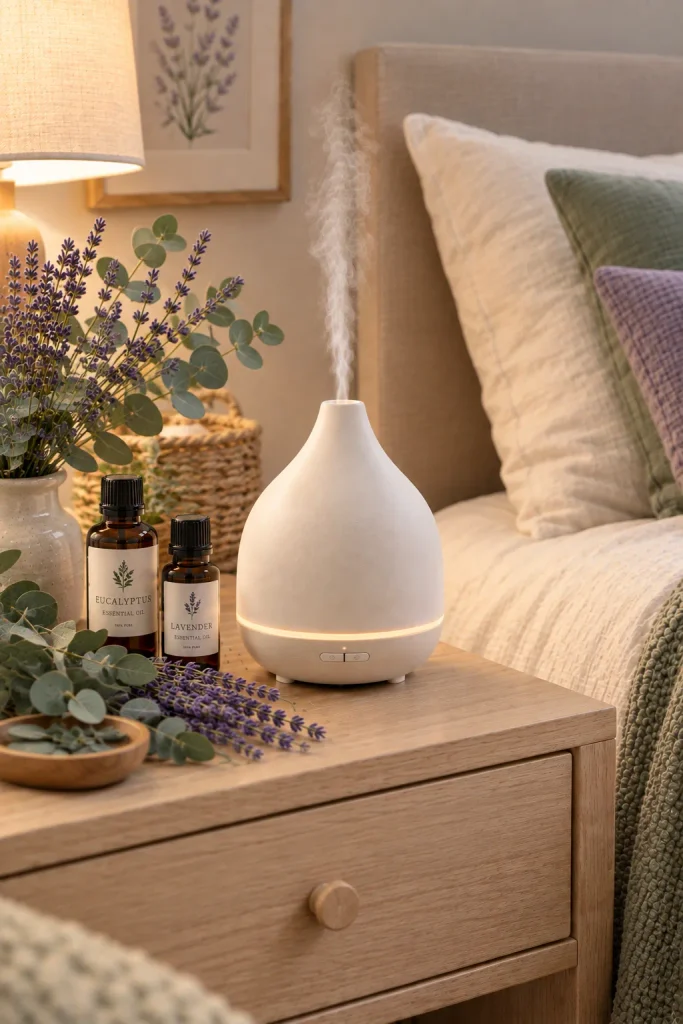
A crisp herbal note can change the character of a floral bedtime blend. Keep eucalyptus very light with 3 drops lavender and just 1 drop eucalyptus essential oil. This ratio gives lavender the leading role while adding a clean botanical accent without making the aroma overly sharp.
Ingredients:
- 3 drops lavender essential oil
- 1 drop eucalyptus essential oil
- Water according to diffuser instructions
How to Make:
- Add water to the diffuser reservoir up to its recommended line.
- Add the lavender and eucalyptus oils.
- Close the diffuser securely.
- Operate the device according to the manufacturer’s instructions.
The lighter eucalyptus ratio makes this recipe easier to control than an equal-parts blend. I’ve noticed that strong eucalyptus aromas can quickly dominate a small room, so beginners may prefer starting with one drop. Avoid increasing the amount simply because you want a stronger scent, and discontinue use if the aroma causes irritation.
Roman Chamomile Lavender
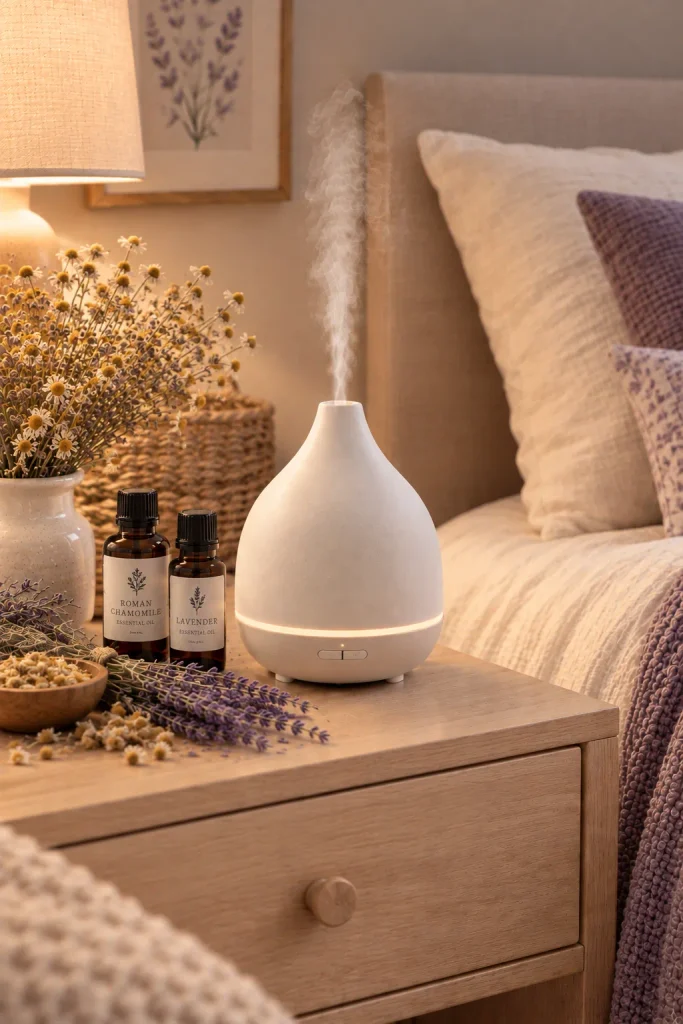
- Ingredients: 3 drops lavender essential oil, 2 drops Roman chamomile essential oil, and water according to the diffuser instructions.
- Aroma: Soft floral with a gentle herbal character.
- Best For: People who prefer simple, lightly scented bedtime blends.
- How to Make: Fill the reservoir to its recommended line, add both oils, secure the lid, and operate the diffuser according to the manufacturer’s instructions.
- Tip: Begin with the listed ratio and adjust future batches only if the scent feels too light for your room.
A simple floral combination keeps this recipe approachable for beginners. Lavender provides the familiar botanical base, while Roman chamomile adds a softer herbal layer. I’ve noticed that uncomplicated blends are easier to fine-tune because you can clearly identify which scent feels too strong or too subtle.
Ingredients:
- 3 drops lavender essential oil
- 2 drops Roman chamomile essential oil
- Water according to diffuser instructions
How to Make:
- Fill the diffuser to its recommended water level.
- Add both essential oils.
- Close the lid securely.
- Operate the diffuser according to the manufacturer’s directions.
Sandalwood Lavender Drops
Quick Tip:
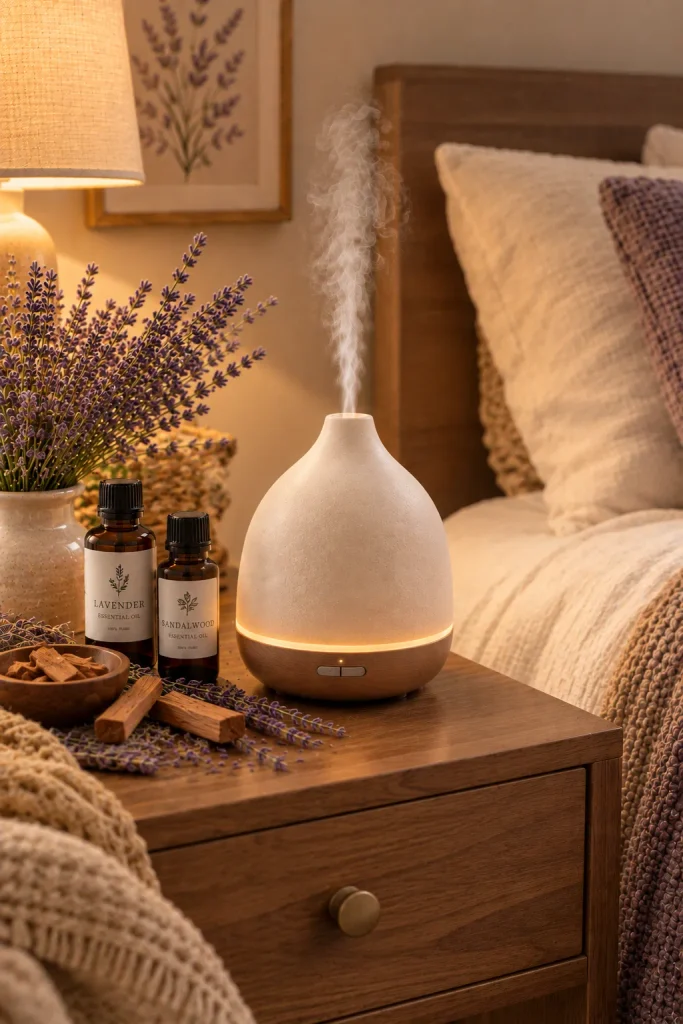
Sandalwood has a naturally deep, woody aroma, so keep it lighter than lavender for a softer blend. Start with 3 drops lavender and 1 drop sandalwood rather than increasing the total oil amount.
The contrast between floral lavender and warm sandalwood gives this recipe a richer character without requiring several ingredients. It pairs naturally with wood furniture, neutral bedding, and low evening lighting. For a compact bedroom, the four-drop starting ratio provides an easy way to assess the fragrance before making adjustments.
Ingredients:
- 3 drops lavender essential oil
- 1 drop sandalwood essential oil
- Water according to the diffuser manufacturer’s instructions
How to Make:
- Fill the reservoir to its recommended water line.
- Add lavender and sandalwood essential oils.
- Replace the diffuser lid.
- Run the device according to its manufacturer’s instructions.
Ylang Ylang Lavender
BEFORE:
A floral diffuser blend can become overwhelming when both oils are used in equal amounts. Strong floral aromas may feel heavy, particularly in a small bedroom with limited airflow.
AFTER:
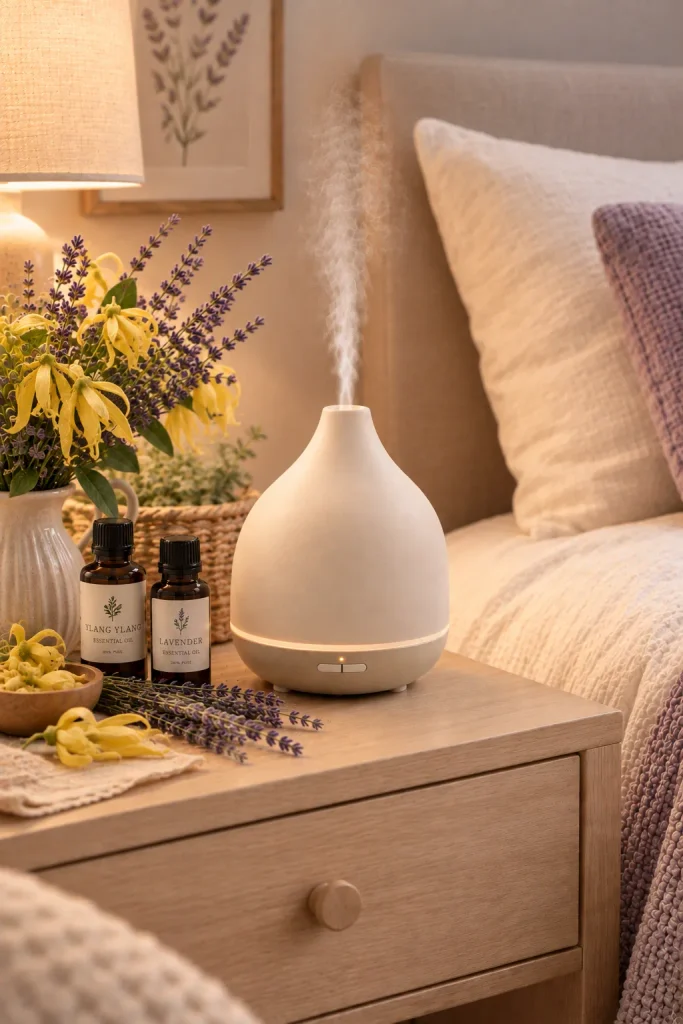
A lighter ylang ylang ratio creates more balance. Use 3 drops lavender with 1 drop ylang ylang, then add water according to your diffuser’s instructions. The lavender remains the main note while ylang ylang contributes a richer floral accent.
This combination works best for people who enjoy noticeable floral scents but prefer a controlled aroma. Start with the smaller amount and observe how the fragrance develops after the diffuser begins operating. Essential oils affect people differently, so stop using the blend if you experience irritation, headache, or other discomfort.
Ingredients:
- 3 drops lavender essential oil
- 1 drop ylang ylang essential oil
- Water according to diffuser instructions
How to Make:
- Fill the diffuser reservoir to the manufacturer’s recommended level.
- Add the lavender essential oil.
- Add 1 drop of ylang ylang essential oil.
- Secure the lid and operate the diffuser according to its instructions.
Cedarwood Bergamot Blend
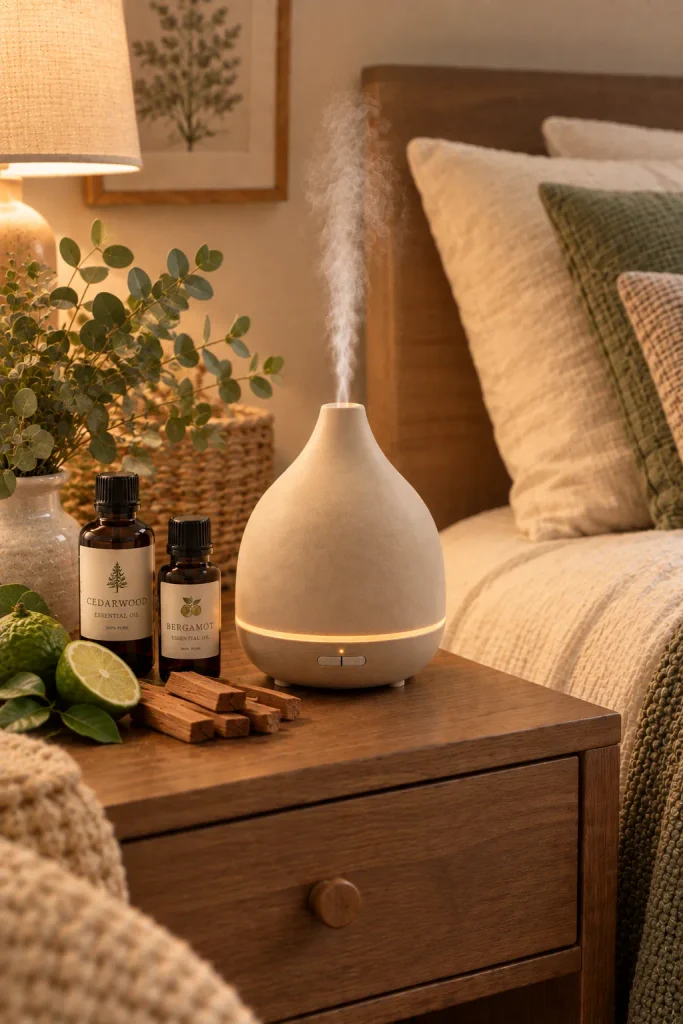
Cost: Low | Time: 2 minutes | Skill Level: Beginner
Best For: Woody-citrus preferences | Works In: Bedrooms and reading corners
Result: Warm, fresh aroma | Difficulty: Very easy
A woody-citrus combination brings two distinct scent families together in one simple recipe. Cedarwood provides depth, while bergamot adds a fresh citrus accent. Start with 2 drops of cedarwood and 1 drop of bergamot so the aroma remains controlled rather than overly strong.
Ingredients:
- 2 drops cedarwood essential oil
- 1 drop bergamot essential oil
- Water according to your diffuser manufacturer’s instructions
How to Make:
- Fill the diffuser reservoir to its recommended water line.
- Add the cedarwood essential oil.
- Add the bergamot essential oil.
- Secure the lid and operate the diffuser according to the manufacturer’s instructions.
Lavender Sweet Marjoram
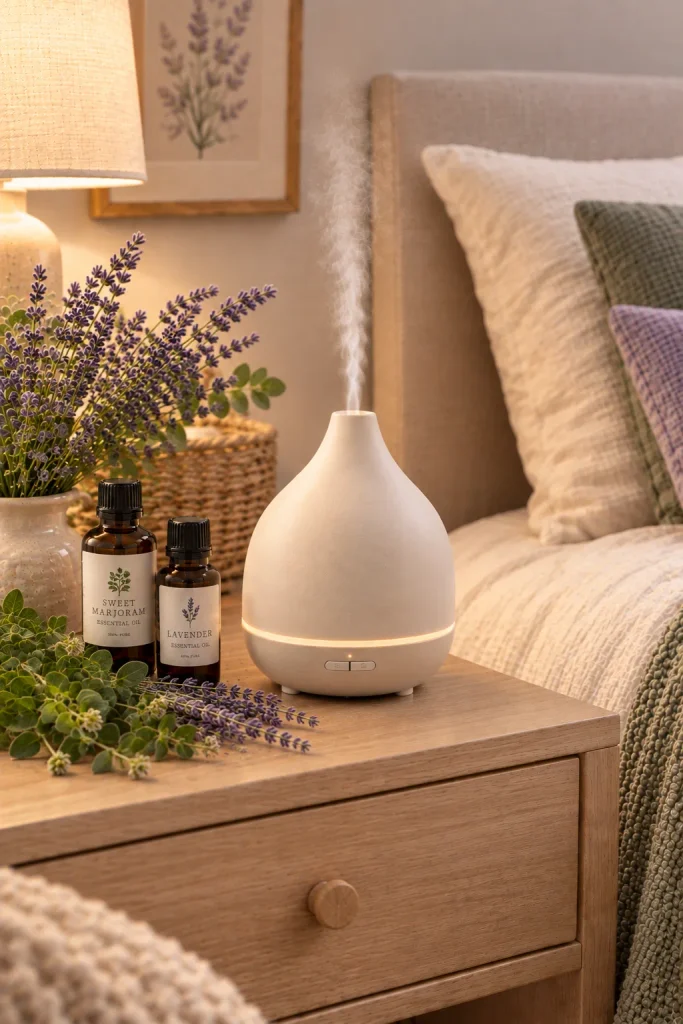
A gentle herbal layer can make a familiar lavender blend feel more nuanced. Combine 3 drops of lavender with 2 drops of sweet marjoram, using water according to your diffuser instructions. The result has a soft floral foundation with a green, herbaceous character that suits understated bedrooms.
The recipe is especially easy to repeat because it uses only two oils. I’ve noticed that keeping one oil dominant helps prevent the fragrance from becoming muddled. Start with the listed five-drop ratio, then consider your room size and personal sensitivity before making any future adjustments.
Ingredients:
- 3 drops lavender essential oil
- 2 drops sweet marjoram essential oil
- Water according to diffuser instructions
How to Make:
- Fill the reservoir to the manufacturer’s recommended level.
- Add the lavender and sweet marjoram oils.
- Close the diffuser securely.
- Run the diffuser according to its operating instructions.
Lemon Cedarwood Blend
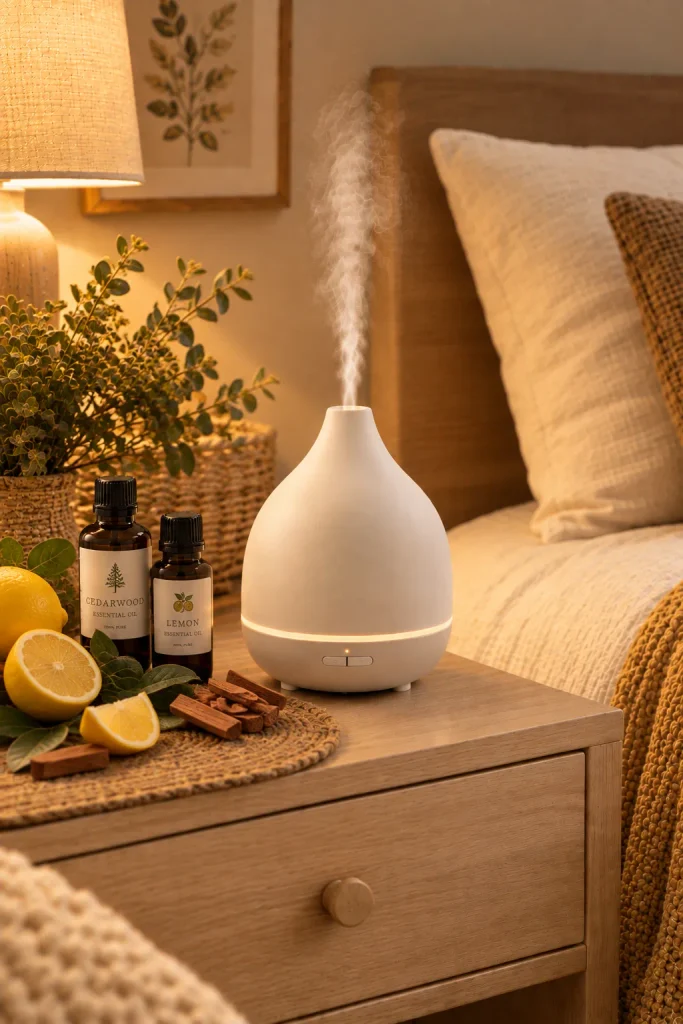
- Ingredients: 3 drops lemon essential oil, 2 drops cedarwood essential oil, and water according to the diffuser manufacturer’s instructions.
- Aroma Balance: Lemon creates the brighter opening note while cedarwood provides a deeper base.
- How to Make: Fill the reservoir, add both oils, secure the lid, and operate the diffuser according to the device instructions.
- Best For: Readers who prefer fresh citrus scents balanced with earthy wood.
- Beginner Tip: Keep the total oil amount modest and adjust only after checking your diffuser’s capacity.
The contrast between crisp lemon and dry cedarwood creates a fresh but grounded aroma. This combination can work nicely during an evening routine when you want something different from purely floral recipes. For smaller rooms, begin with the listed ratio and avoid increasing the drops simply because the scent seems subtle at first.
Ingredients:
- 3 drops lemon essential oil
- 2 drops cedarwood essential oil
- Water according to diffuser instructions
How to Make:
- Add water to the recommended fill line.
- Add lemon essential oil.
- Add cedarwood essential oil.
- Replace the lid and operate the diffuser as directed.
Lavender Vetiver Blend
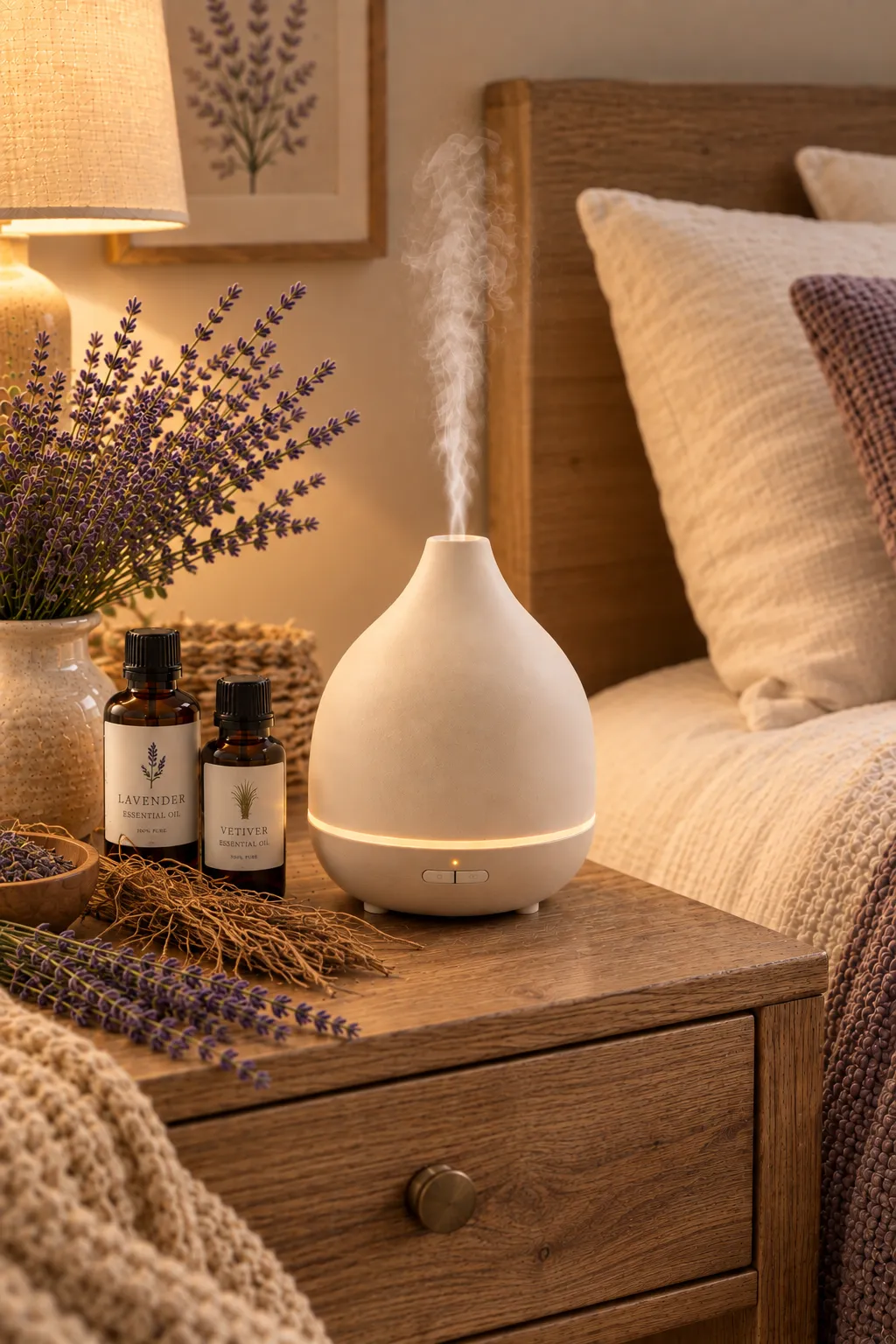
Fact: Lavender provides the softer floral character.
Fact: Vetiver has a deep, earthy woody aroma.
Fact: The combination creates a grounded scent profile.
Best For: People who prefer earthy fragrances with a gentle floral layer.
The deep character of vetiver gives familiar lavender a more earthy direction without requiring several different oils. This pairing works nicely in bedrooms decorated with wood, linen, and neutral textures. Keep the blend modest at first because vetiver has a naturally strong aroma that can quickly become the dominant note.
Ingredients:
- 3 drops lavender essential oil
- 1 drop vetiver essential oil
- Water according to diffuser instructions
How to Make:
- Fill the diffuser reservoir to the manufacturer’s recommended level.
- Add the lavender and vetiver oils.
- Replace the lid securely.
- Operate the diffuser according to its instructions.
Rose Lavender Blend
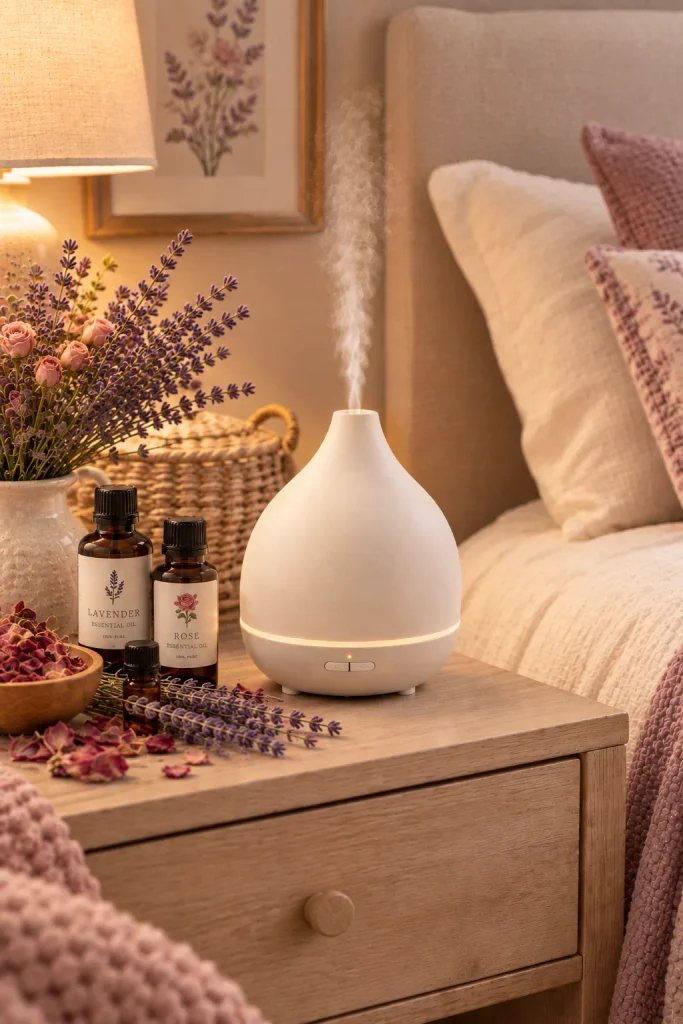
Rose and lavender create a soft floral combination that feels especially fitting for a cozy evening routine. The rose note adds a delicate sweetness while lavender keeps the aroma familiar and herbal. I’ve found that floral blends work beautifully with clean bedding and soft lighting, making the whole bedtime environment feel more intentional.
Ingredients:
- 2 drops lavender essential oil
- 1 drop rose essential oil
- 1 drop cedarwood essential oil
- Water according to diffuser instructions
How to Make:
- Add water according to your diffuser’s recommended fill line.
- Add lavender, rose, and cedarwood essential oils.
- Secure the diffuser lid.
- Run the diffuser according to the manufacturer’s directions.
Lemon Lavender Mix
DO:
- Keep lavender as the main floral note.
- Use only a small amount of lemon for brightness.
- Start with a modest total oil amount.
- Follow the diffuser manufacturer’s water and operating instructions.
DON’T:
- Add large amounts of citrus oil just for stronger fragrance.
- Place the diffuser directly beside your face or pillow.
- Ignore personal sensitivity to particular aromas.
- Exceed the device’s recommended water or oil guidance.
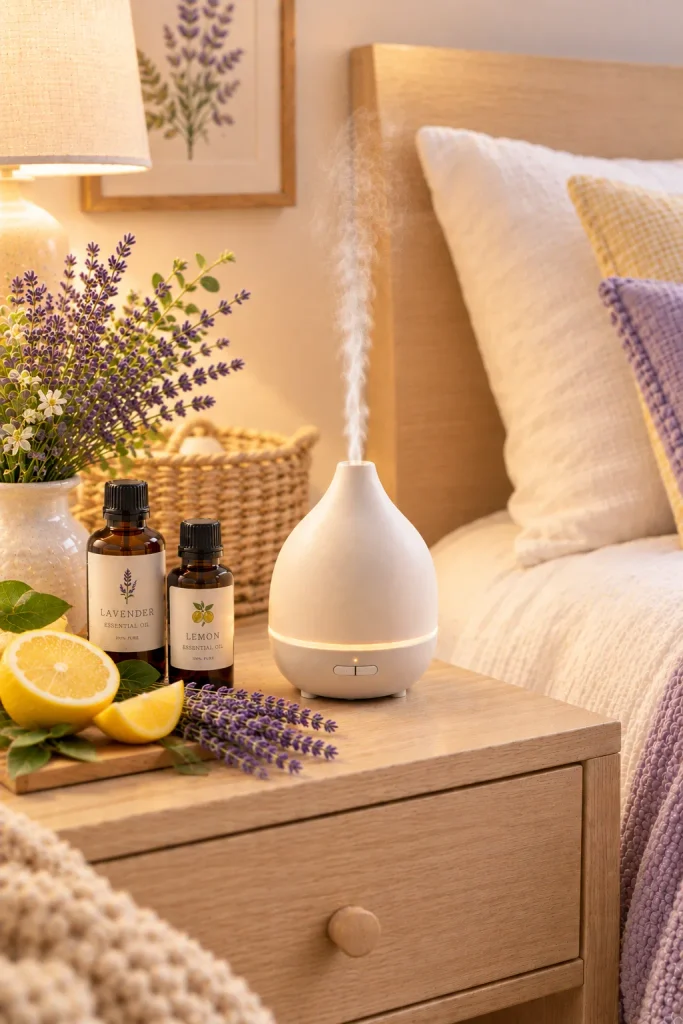
The lemon note gives lavender a clean, fresh character that can suit people who find heavier blends too rich. This recipe is especially appealing for a bedroom that already feels bright and airy. Start with a gentle ratio, then adjust future batches according to your personal scent preference and diffuser instructions.
Ingredients:
- 3 drops lavender essential oil
- 1 drop lemon essential oil
- Water according to diffuser instructions
How to Make:
Fill the reservoir to the recommended level, add the oils, secure the lid, and operate the diffuser according to the manufacturer’s instructions.
Cedarwood Orange Drops
- Prepare the water: Fill the diffuser reservoir according to its recommended water line.
- Add the woody note: Add 2 drops of cedarwood essential oil.
- Add citrus: Add 2 drops of sweet orange essential oil for a softer fruity contrast.
- Check the setup: Secure the lid and place the diffuser on a stable surface away from bedding.
- Run as directed: Follow the manufacturer’s recommended operating instructions.
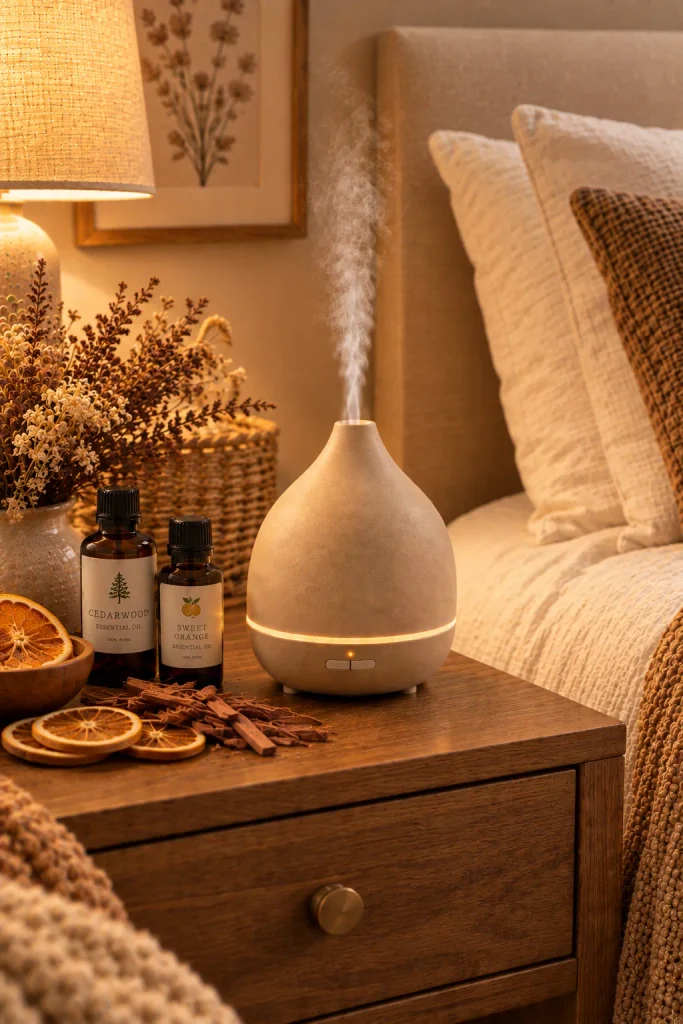
Cedarwood and sweet orange create an inviting contrast between dry woods and bright citrus. The orange keeps the woody aroma from feeling too heavy, while cedarwood adds warmth and depth. This is a practical option for anyone who enjoys balanced fragrances and wants something different from the usual lavender-focused bedtime combinations.
Ingredients:
- 2 drops cedarwood essential oil
- 2 drops sweet orange essential oil
- Water according to diffuser instructions
How to Make:
Follow the five steps above, using the manufacturer’s recommended water level and operating time for your diffuser.
Bergamot Chamomile
| Option | Aroma Character | Best For |
| Chamomile Forward | Soft, herbal, floral | Gentle floral preferences |
| Bergamot Forward | Fresh, citrusy, lightly floral | Brighter scent preferences |
| Balanced | Soft citrus with herbal depth | People wanting both notes |
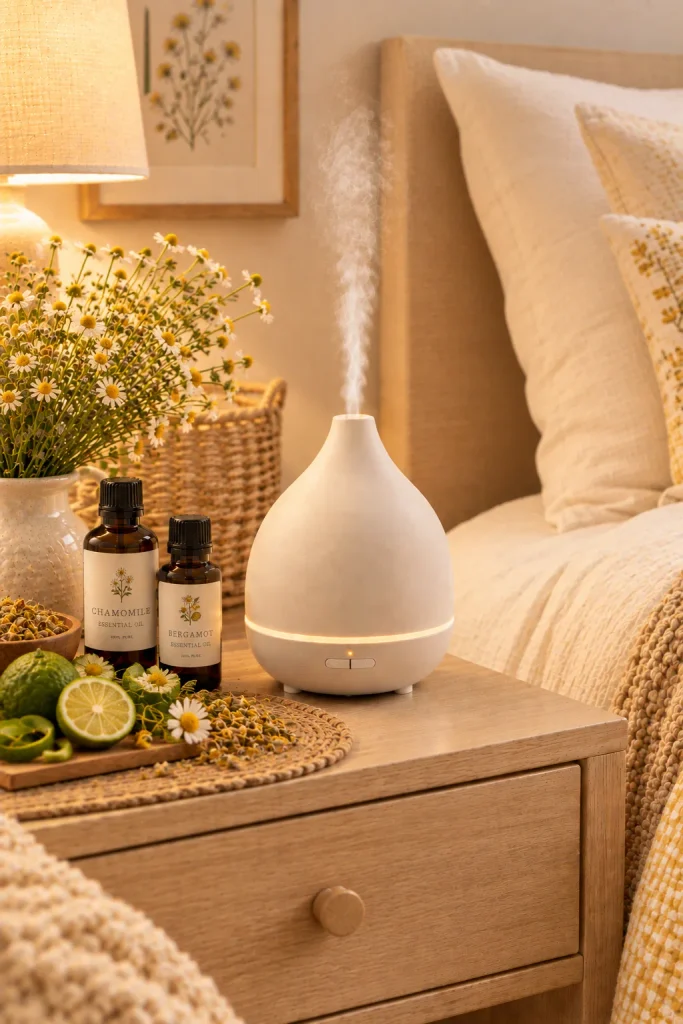
A chamomile-forward blend feels softer and more herbal, while additional bergamot creates a brighter citrus impression. The balanced option offers a middle ground without requiring a long ingredient list. I’ve noticed that comparing scent directions before mixing makes it easier to choose a recipe that fits your personal evening preferences.
Ingredients:
- 2 drops Roman chamomile essential oil
- 2 drops bergamot essential oil
- Water according to diffuser instructions
How to Make:
- Fill the diffuser with the recommended amount of water.
- Add chamomile and bergamot oils.
- Secure the lid.
- Operate the diffuser according to manufacturer instructions.
Patchouli Lavender Mix
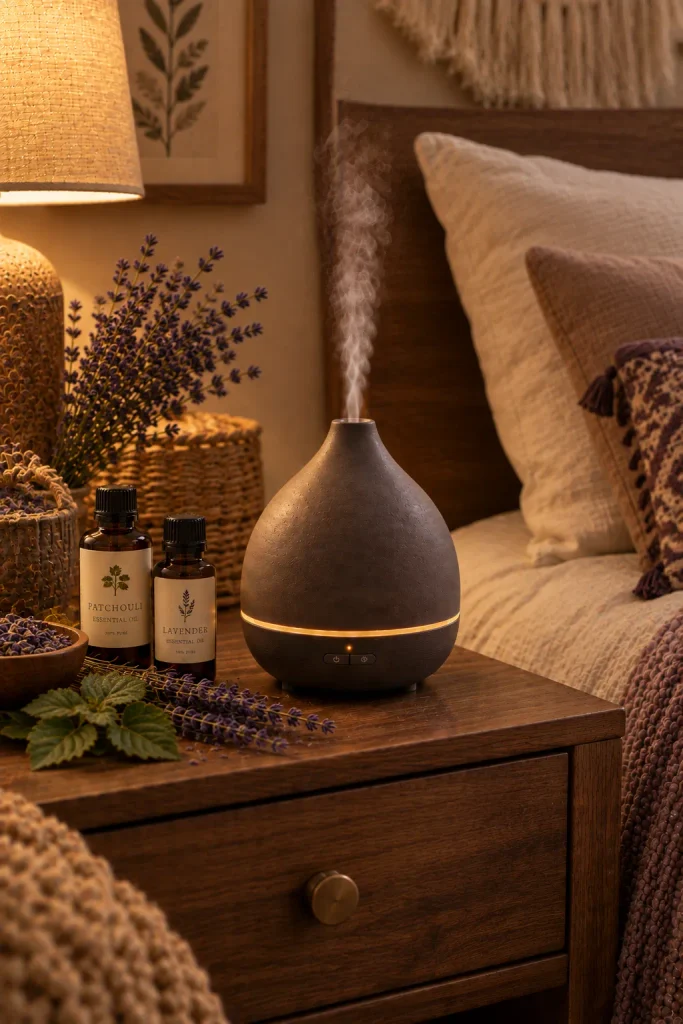
DO:
- Keep lavender as the dominant aroma.
- Use patchouli sparingly because its character is naturally intense.
- Test the blend in a well-ventilated room.
- Follow your diffuser manufacturer’s instructions.
DON’T:
- Add extra patchouli simply to make the scent stronger.
- Place the diffuser immediately beside your pillow.
- Continue using a scent that causes discomfort or irritation.
- Exceed the diffuser’s recommended operating guidelines.
Patchouli adds a rich earthy layer to familiar lavender, creating a deeper scent profile for evening spaces. This blend suits people who prefer warm, grounded aromas rather than sweet or fruity fragrances. A small amount of patchouli goes a long way, so keeping lavender dominant makes the combination easier to enjoy.
Ingredients:
- 3 drops lavender essential oil
- 1 drop patchouli essential oil
- Water according to diffuser instructions
How to Make:
Fill the reservoir to the recommended level, add lavender and patchouli, secure the lid, and operate according to the manufacturer’s instructions.
Chamomile Cedarwood Mix
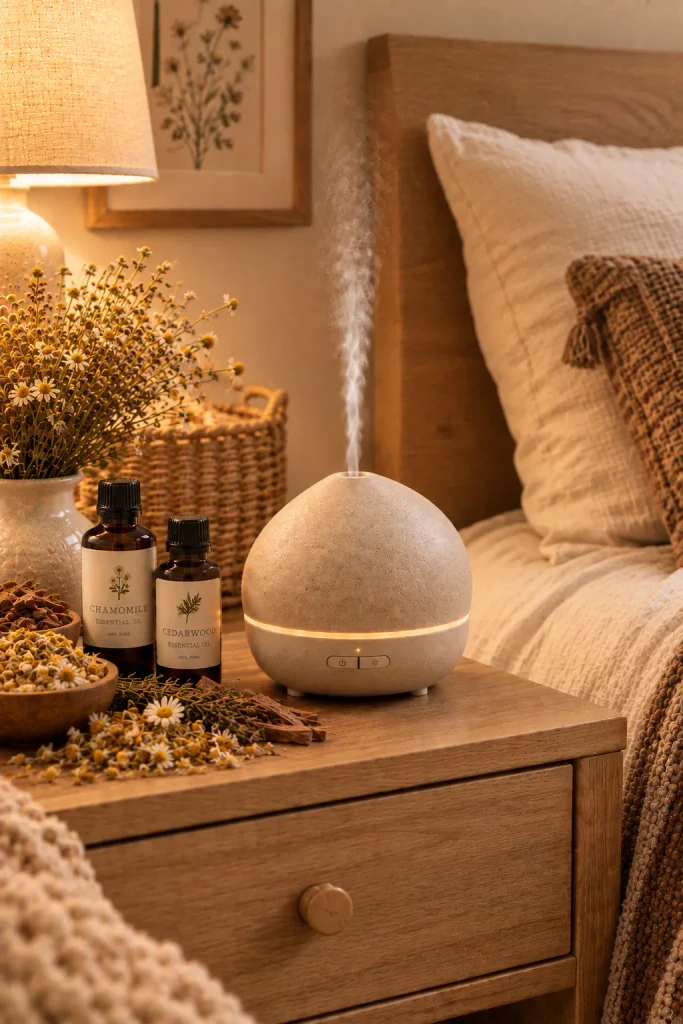
Quick Tip:
Let chamomile remain the lighter floral note while cedarwood provides the deeper base. A simple 2-to-2 ratio is an easy starting point, but always use the water amount and operating time recommended for your particular diffuser.
The combination creates a gentle contrast between soft herbal-floral and dry woody notes. It suits readers who want something less sweet than vanilla-based blends. Keep the aroma restrained in smaller rooms, since cedarwood can become prominent. A short evening session may be enough to scent the room without making the fragrance feel overwhelming.
Ingredients:
2 drops Roman chamomile essential oil
2 drops cedarwood essential oil
Water according to diffuser instructions
How to Make:
Fill the reservoir to its recommended water line.
Add chamomile and cedarwood essential oils.
Secure the diffuser lid.
Run the device according to the manufacturer’s instructions.
CONCLUSION
A peaceful evening routine does not need to be complicated. These Essential Oil Diffuser Recipes for Peaceful Sleep offer plenty of inspiration, from soft floral combinations to warm woods and refreshing botanical notes. Choose one blend that matches your personal taste and start with a simple recipe before exploring others. In my experience, small changes in scent and atmosphere can make a bedroom feel noticeably more inviting at the end of the day. Save this post on Pinterest so your favorite ideas are easy to find later, try a new blend tonight, and share the article with someone who would enjoy a calmer bedtime routine.