
21 DIY All Purpose Cleaner Recipe Ideas for a Fresh Home
A fresh, clean home doesn’t have to come with a cabinet full of expensive cleaning products. Sometimes, a few simple ingredients are all you need to make everyday tidying easier.
These DIY All Purpose Cleaner Recipe Ideas offer practical inspiration for creating homemade cleaning solutions using familiar household supplies. From gentle soap sprays to citrus-inspired mixtures and simple sink scrubs, you’ll find options for tackling everyday dirt, fingerprints, and kitchen messes.
I’ve noticed that keeping cleaning recipes simple makes it easier to build a routine that actually fits busy days. Whether you’re looking to reduce unnecessary purchases, avoid added fragrances, or organize your cleaning supplies, these ideas give you plenty of options to explore. Each recipe includes ingredients and straightforward preparation steps, making it easier to choose a solution for your home. Remember to check surface compatibility, label homemade mixtures clearly, and never mix cleaning chemicals. Let’s find a few practical favorites to try and save for later!
Lemon Castile Soap Spray

A fresh-smelling kitchen starts with a simple cleaner that handles everyday dust, fingerprints, and light grease. This lemon-inspired soap spray combines liquid Castile soap with water for a practical cleaning solution without relying on complicated ingredients.
Ingredients
- 1 teaspoon liquid Castile soap
- 2 cups warm water
- 1 clean spray bottle
- 1 microfiber cleaning cloth
How to Make
- Pour the warm water into a clean spray bottle.
- Add the liquid Castile soap slowly to avoid creating too much foam.
- Close the bottle and gently swirl to combine.
- Spray the solution onto a microfiber cloth and wipe washable surfaces.
- Rinse with a clean, damp cloth if soap residue remains.
Use this mixture on suitable sealed countertops, washable cabinet fronts, and everyday kitchen surfaces. Although the recipe has a fresh, simple feel, it does not contain lemon juice or essential oil. Test an inconspicuous spot first, and prepare small batches for regular household cleaning.
ALSO READ : Lazy Thanksgiving Crockpot Recipes
Lavender Soap Cleaner
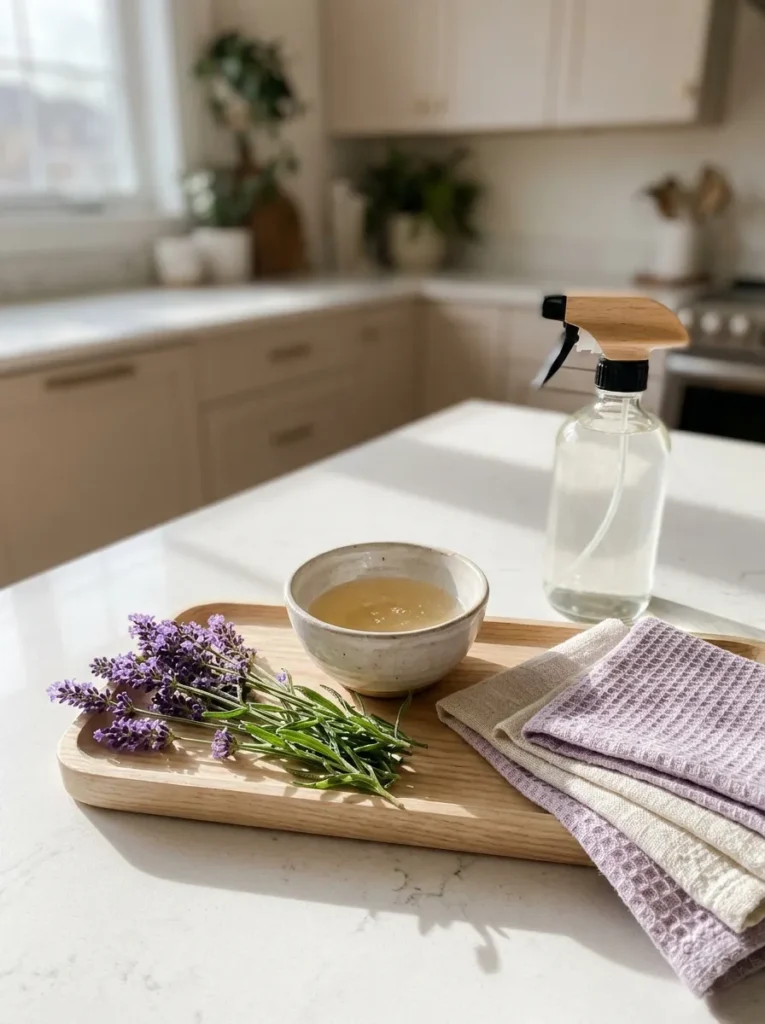
A tidy room feels even more inviting when your cleaning routine stays simple. This lavender-inspired cleaner uses a mild soap-and-water base, while fresh lavender serves as a decorative botanical accent rather than an ingredient that claims to disinfect surfaces.
Ingredients
- 1 teaspoon liquid Castile soap
- 2 cups warm water
- 1 clean spray bottle
- Fresh lavender sprigs for decoration, kept outside the solution
- 1 soft microfiber cloth
How to Make
- Add the warm water to the spray bottle.
- Measure in the liquid Castile soap.
- Close the bottle and swirl gently until combined.
- Label the bottle with its ingredients and preparation date.
- Apply a small amount to a cloth and wipe an appropriate washable surface.
Keep the actual mixture free of fresh flowers so plant material does not sit in the water and spoil. The lavender adds visual charm to your cleaning station, while the soap solution tackles ordinary dirt. Avoid using it on surfaces that require a specialized cleaner, and never mix it with bleach or other cleaning chemicals.
Pinterest Account : FreshRecipeIdeas1
Baking Soda Cleaning Spray
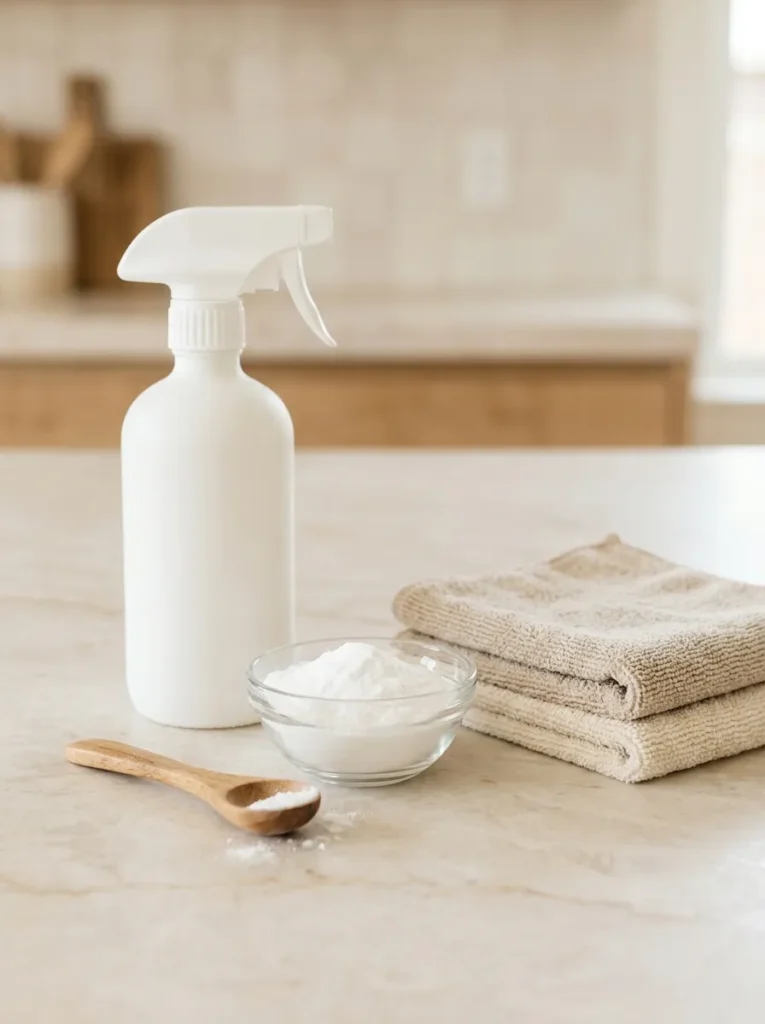
Stubborn everyday marks sometimes need a little extra attention, but a complicated formula is not always necessary. Baking soda is useful as a mild abrasive when applied appropriately, while a diluted solution can help with some routine cleaning tasks.
Ingredients
- 1 teaspoon baking soda
- 2 cups warm water
- 1 clean spray bottle
- 1 soft cleaning cloth
How to Make
- Pour the warm water into a clean container.
- Add the baking soda and stir until it dissolves as much as possible.
- Transfer the mixture to a clean, clearly labeled spray bottle.
- Shake gently before each use because some powder may settle.
- Apply to a suitable washable surface, wipe gently, and rinse if needed.
This simple mixture can be useful for light cleaning, but it will not replace a disinfectant or remove every type of grease. Baking soda may scratch delicate finishes, so test it in a hidden area first. For tougher marks, a small amount of baking soda on a damp cloth may provide more controlled scrubbing than spraying the solution.
Mild Dish Soap Counter Spray
BEFORE
Kitchen counters often collect sticky drink rings, crumbs, and fingerprints throughout the day. Repeated wiping with plain water may leave greasy patches behind.
AFTER
A diluted dish soap solution helps loosen everyday grime, making routine cleanup easier. A clean, damp cloth removes remaining soap residue and leaves suitable washable surfaces looking neat.
For a simple cleaning routine, keep the mixture mild and use it only on compatible surfaces. Avoid soaking wooden countertops or unfinished materials, and always follow the surface manufacturer’s care instructions.
Ingredients
- 2 cups warm water
- 1 teaspoon mild dish soap
- 1 clean spray bottle
- 1 microfiber cloth
How to Make
- Pour the warm water into a clean spray bottle.
- Add the dish soap and swirl gently to combine.
- Label the bottle with the ingredients and preparation date.
- Spray a small amount onto a microfiber cloth.
- Wipe the counter, then use a clean, damp cloth to remove soap residue.
Unscented Castile Cleaning Mix

- Measure: Pour 2 cups of warm water into a clean mixing container.
- Add soap: Mix in 1 teaspoon of unscented liquid Castile soap.
- Combine: Stir gently to avoid creating excessive foam.
- Transfer: Pour the mixture into a clean, labeled spray bottle.
- Test: Apply it to a small, hidden area of a suitable washable surface before general use.
Ingredients
- 2 cups warm water
- 1 teaspoon unscented liquid Castile soap
- 1 clean spray bottle
- 1 soft microfiber cloth
How to Make
Prepare only a small batch for your regular cleaning routine, rather than storing a large bottle for weeks. This fragrance-free formula is useful for people who prefer fewer added scents around the home. Apply it to a cloth for better control, especially on cabinet fronts and other finished surfaces. Wipe away residue with a clean, damp cloth when necessary.
Alcohol Glass and Surface Spray
| Cleaning option | Best use |
| Plain water | Light dust and simple wipe-downs |
| Alcohol-based glass cleaner | Suitable glass surfaces and some compatible hard surfaces |
| Microfiber cloth | Removing smudges and reducing lint |
An alcohol-based cleaner can help remove fingerprints from compatible glass surfaces, but the correct formula depends on the alcohol concentration and the material being cleaned. For a safer everyday routine, use a commercially prepared glass cleaner according to its label, particularly around coated glass, painted finishes, and electronics.
Ingredients
- A commercially prepared glass cleaner containing alcohol
- A clean microfiber cloth
- A second dry, lint-free cloth if needed
How to Make
- Select a glass cleaner labeled for the surface you intend to clean.
- Read the label for application instructions and material restrictions.
- Spray the product onto a cloth when appropriate, rather than directly onto nearby electronics or delicate fittings.
- Wipe the glass using even strokes.
- Buff gently with a dry, lint-free cloth if the product directions recommend it.
Safety note: Do not mix rubbing alcohol with bleach or other cleaning products. Keep alcohol-based products away from flames and heat, provide adequate ventilation, and follow the manufacturer’s precautions.
White Vinegar Tile Spray
DO
- Use a diluted vinegar solution only on vinegar-safe, acid-resistant surfaces.
- Test a hidden spot before cleaning a large area.
- Wipe with a soft microfiber cloth.
- Rinse the surface with clean water when appropriate.
DON’T
- Never apply vinegar to marble, limestone, or other acid-sensitive stone.
- Don’t mix vinegar with bleach.
- Don’t use it on surfaces with manufacturer warnings against acidic cleaners.
- Don’t assume vinegar disinfects a surface simply because it is acidic.
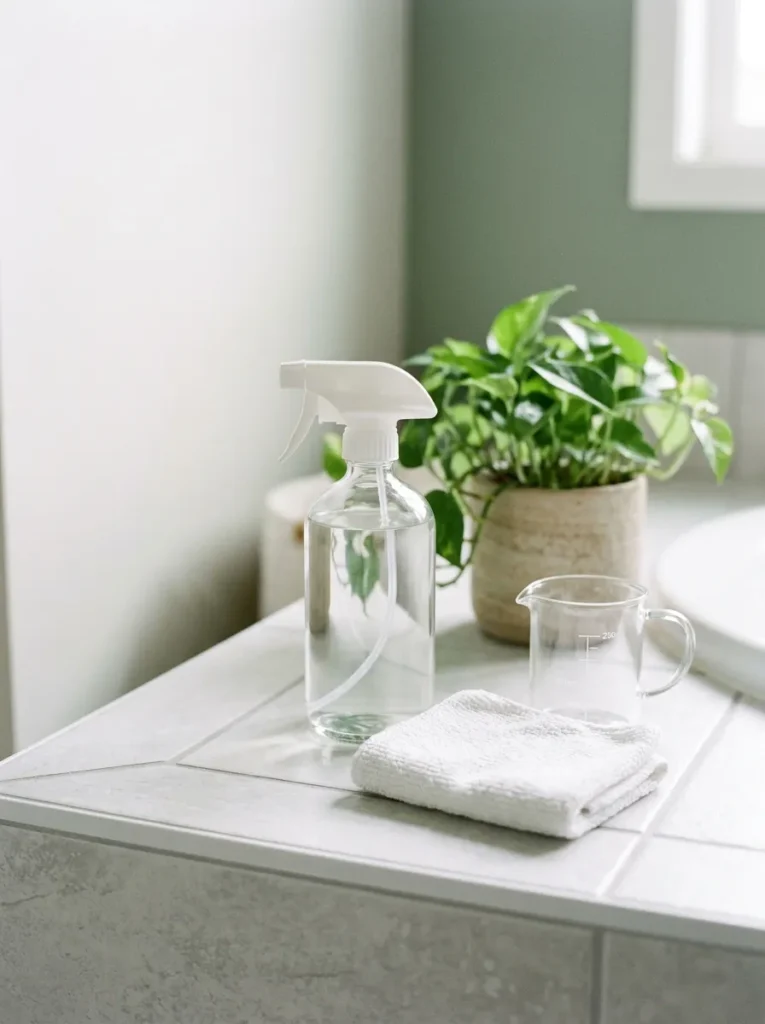
White vinegar can help remove some mineral deposits and everyday residue from compatible surfaces. For a simple mixture, combine one cup of white vinegar with one cup of water in a labeled spray bottle. Apply sparingly, wipe, and rinse as needed. Check tile and grout care instructions first because some grout sealers and finishes may be damaged by repeated acidic cleaning.
Ingredients
- 1 cup white vinegar
- 1 cup water
- 1 clean spray bottle
- 1 microfiber cloth
How to Make
- Pour the water and white vinegar into a clean container.
- Stir gently to combine.
- Transfer the mixture to a spray bottle.
- Label the bottle clearly with its ingredients.
- Test on a small, compatible tile area before wider use.
Everyday Kitchen Degreaser
Cost: Low, using common household supplies.
Preparation Time: About 3 minutes.
Skill Level: Beginner-friendly.
Best For: Light grease, fingerprints, and cooking splashes on compatible washable surfaces.
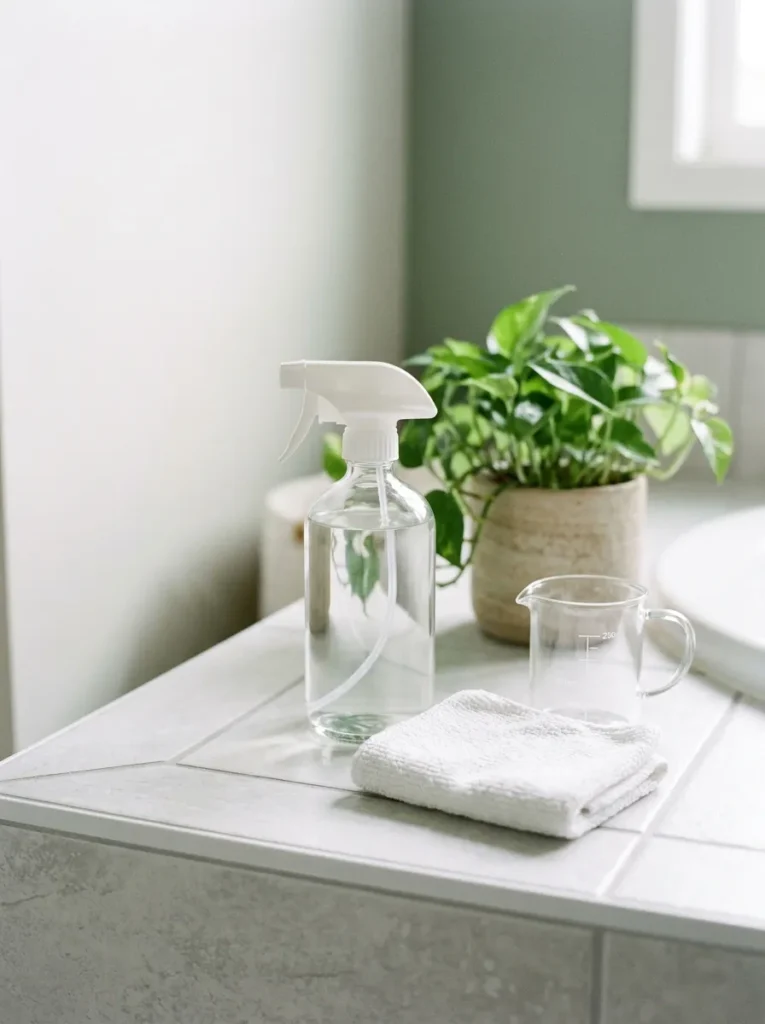
A few drops of mild dish soap can help loosen oily cooking residue without requiring a complicated homemade formula. Mix one teaspoon of dish soap with two cups of warm water, then apply it to a cloth and wipe the affected area. For greasy stovetops, let the damp cloth rest briefly over the residue before wiping. Always switch off the appliance and allow it to cool completely first. Finish with a clean, damp cloth to remove soap film, then dry the surface. Avoid spraying directly into burners, electrical controls, or appliance openings.
Ingredients
- 2 cups warm water
- 1 teaspoon mild dish soap
- 1 clean spray bottle
- 1 microfiber cloth
How to Make
- Add the warm water to a clean container.
- Mix in the dish soap gently.
- Transfer the solution into a labeled spray bottle.
- Apply it to a microfiber cloth rather than spraying near electrical components.
- Wipe the cooled surface and remove any remaining soap with a damp cloth.
Orange Peel Cleaning Spray
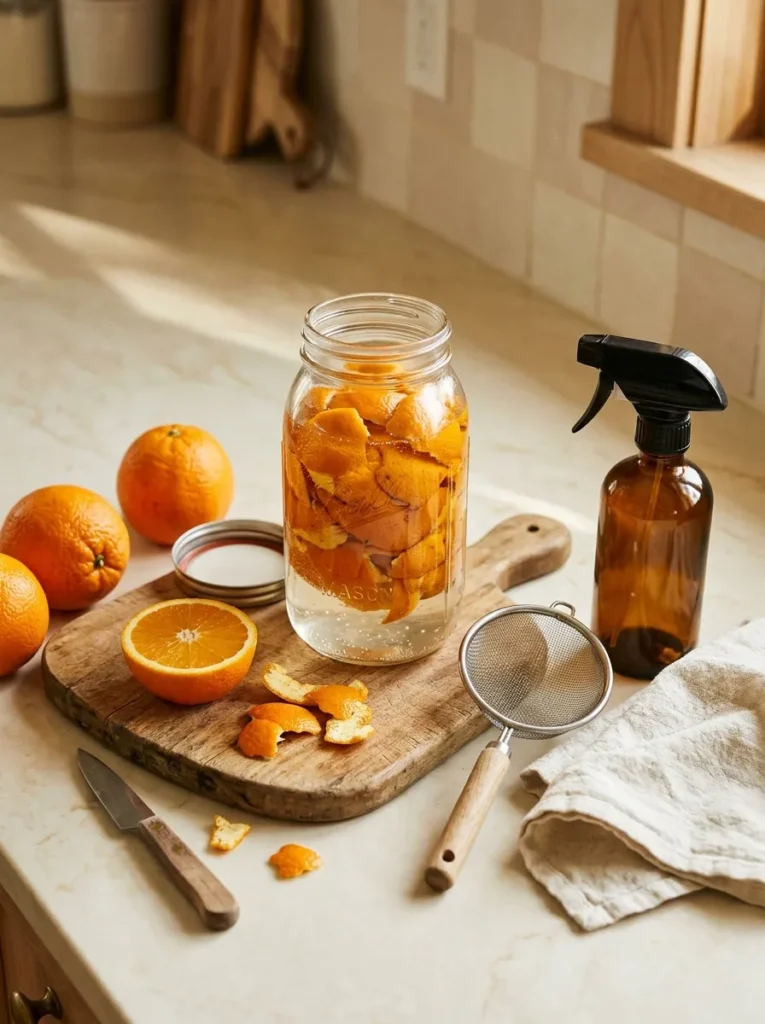
A citrus-infused cleaner brings a bright, fresh look to your household cleaning supplies while making use of leftover orange peels. The infusion is made with white vinegar, which can help loosen certain residues on compatible surfaces. The orange peel adds fragrance, but it does not make the solution a proven disinfectant.
I’ve noticed that preparing an infusion in a clearly labeled jar makes the process easier to manage because the preparation date is visible. Allow the peels to steep for one to two weeks, then strain them out thoroughly. Dilute the infused vinegar with an equal amount of water before use. Avoid natural stone and other acid-sensitive materials, and discard the mixture if its appearance or smell changes unexpectedly.
Ingredients
- Orange peels from 2 oranges
- 1 cup white vinegar
- 1 cup water
- 1 clean glass jar with a lid
- 1 strainer
- 1 labeled spray bottle
How to Make
- Place the orange peels in a clean glass jar.
- Pour in enough white vinegar to cover the peels.
- Close the jar and let it steep for one to two weeks.
- Strain the liquid carefully, removing all pieces of peel.
- Mix equal amounts of the infused vinegar and water in a spray bottle.
- Label the bottle and test a small, compatible surface before cleaning.
Safety reminder: Never mix vinegar with bleach or bleach-containing products. Prepare small quantities, keep the bottle away from children and pets, and use a properly labeled commercial disinfectant when disinfection is required.
Peppermint Soap Spray
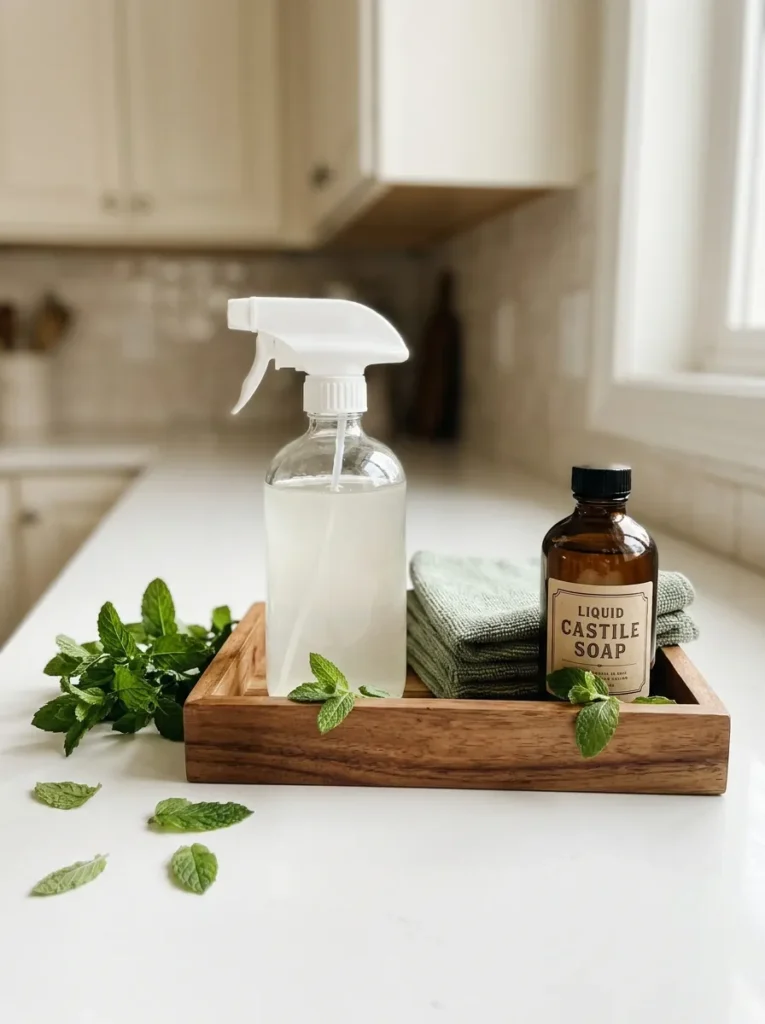
A fresh-looking cleaning spray can make everyday kitchen tidying feel more organized. This simple soap-based mixture is suitable for removing light dirt, fingerprints, and everyday residue from compatible washable surfaces. Peppermint leaves provide a botanical accent for the scene, but they are not added to the cleaning liquid.
Keep the formula mild and use a microfiber cloth to control how much moisture reaches the surface. In my experience, applying cleaner to the cloth instead of spraying everything directly helps prevent excess liquid from collecting around cabinet edges. Wipe away any remaining soap with a clean, damp cloth.
Ingredients
- 2 cups water
- 1 teaspoon liquid Castile soap
- 1 clean spray bottle
- 1 microfiber cloth
How to Make
- Pour the water into a clean mixing container.
- Add the liquid Castile soap and stir gently.
- Transfer the mixture into a clean spray bottle.
- Label the bottle with the ingredients and preparation date.
- Apply a small amount to a microfiber cloth and wipe a compatible washable surface.
- Rinse with a damp cloth if soap residue remains.
Baking Soda Sink Scrub
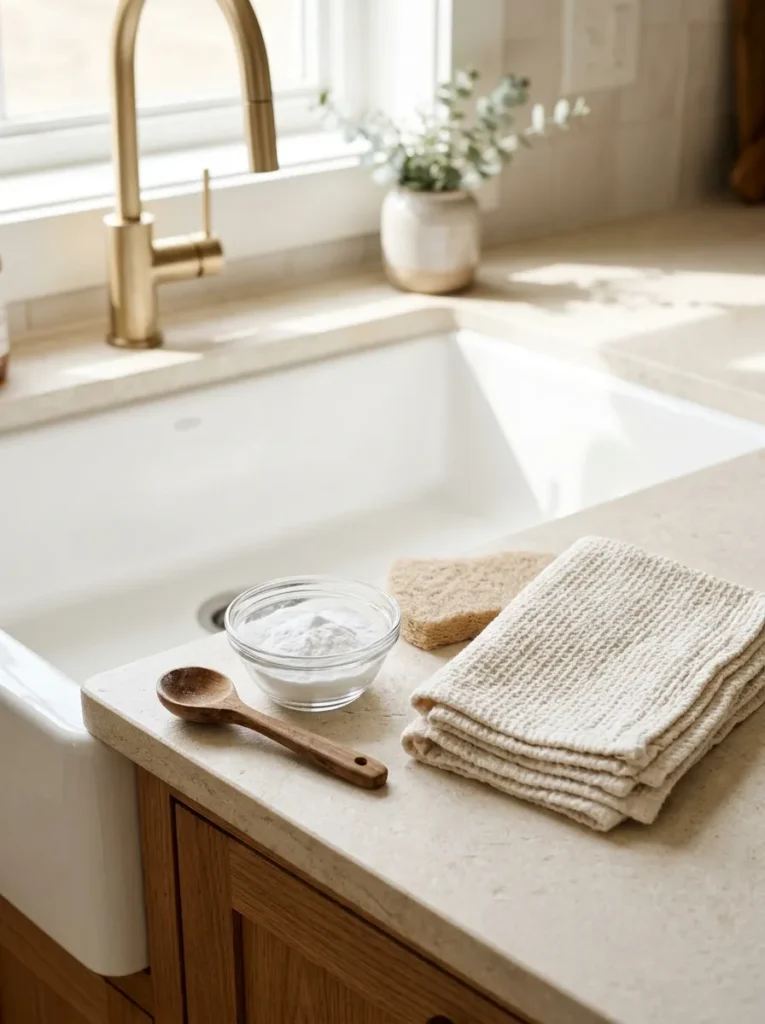
- Ingredients: Baking soda, water, a soft sponge, and a clean rinsing cloth.
- Preparation: Mix three tablespoons of baking soda with one to two teaspoons of water.
- Application: Spread a small amount of paste over compatible sink surfaces.
- Cleaning: Rub gently with a non-scratch sponge, focusing on visible marks.
- Finishing: Rinse thoroughly and dry with a soft cloth.
Ingredients
- 3 tablespoons baking soda
- 1 to 2 teaspoons water
- 1 non-scratch sponge
- 1 clean microfiber cloth
How to Make
- Place the baking soda in a small bowl.
- Add water gradually until a thick, spreadable paste forms.
- Apply the paste to a small section of the sink.
- Rub gently with a non-scratch sponge.
- Rinse away all residue with clean water.
- Dry the sink with a microfiber cloth.
This homemade scrub works through gentle abrasion rather than chemical disinfection. It may help loosen everyday grime around the basin, but it can scratch some polished finishes. Test a hidden area before cleaning the entire sink, and follow the manufacturer’s care instructions for stainless steel, composite, or specialty finishes. Never combine cleaning ingredients in a sealed container.
Tea Tree Inspired Surface Cleaner
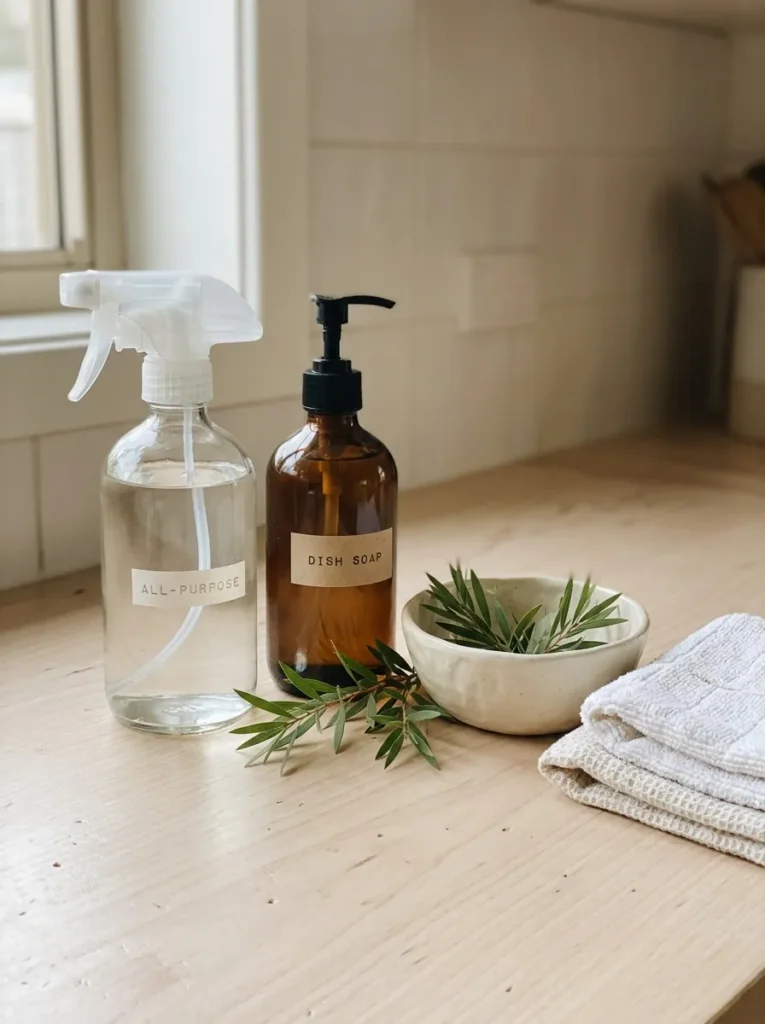
Quick Tip:
Keep botanical ingredients separate from your actual cleaning solution. Fresh leaves and essential oils do not automatically make a household spray safer or more effective, and tea tree oil can be harmful to pets, especially if swallowed or improperly applied.
For routine cleaning, a mild soap-and-water mixture is a more straightforward choice. It can help remove ordinary dirt and fingerprints from suitable washable surfaces without relying on strong fragrance. Apply it with a microfiber cloth, then wipe away soap residue where necessary. This formula is intended for cleaning, not disinfecting, so use a suitable labeled disinfectant when germ control is required.
Ingredients
- 2 cups water
- 1 teaspoon mild liquid dish soap
- 1 clean spray bottle
- 1 microfiber cloth
How to Make
- Measure two cups of water into a clean container.
- Add one teaspoon of mild dish soap.
- Stir slowly to combine without producing excess foam.
- Pour the mixture into a clean spray bottle.
- Label the bottle with the ingredients and preparation date.
- Apply to a cloth, wipe a compatible surface, and rinse if needed.
Glass and Mirror Cleaner
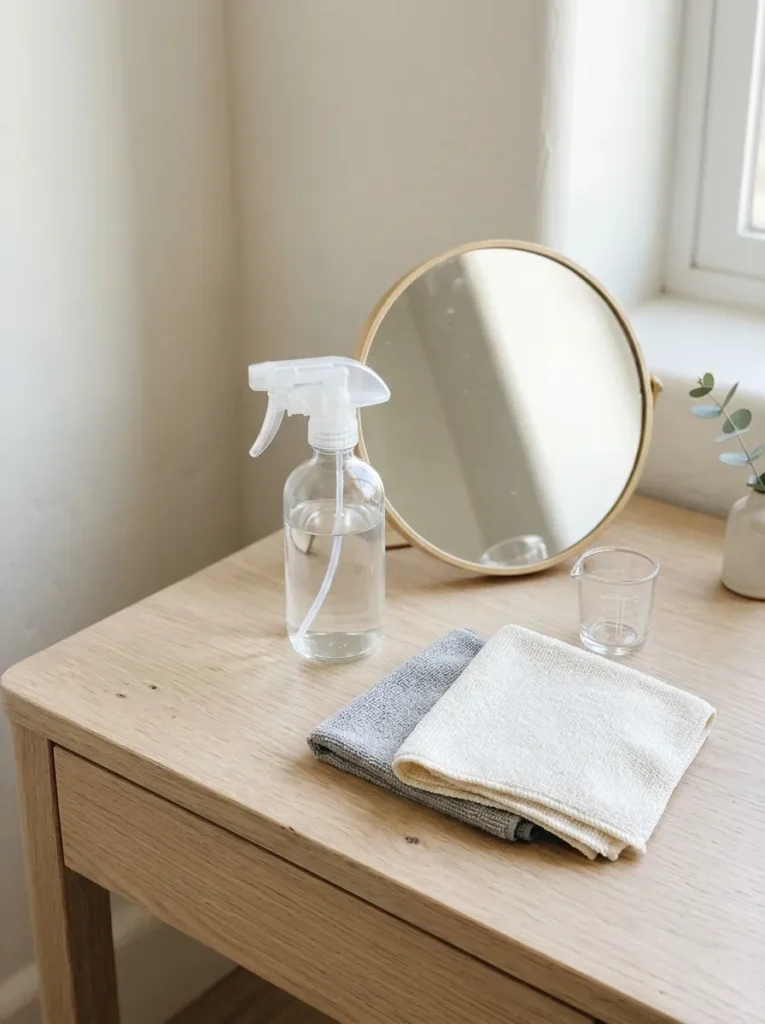
Fingerprints and cloudy marks can make a clean room feel untidy. This simple glass-cleaning mixture uses diluted vinegar to help loosen everyday residue on compatible glass surfaces. Apply it sparingly and buff with a dry cloth to reduce streaks.
The best results come from using clean, lint-free cloths rather than paper towels that leave fibers behind. Avoid spraying liquid directly onto mirror edges, frames, or nearby electrical fittings. Never use vinegar on natural stone, and check the manufacturer’s instructions before cleaning coated glass.
Ingredients
- 1 cup water
- 1 cup white vinegar
- 1 clean spray bottle
- 2 lint-free microfiber cloths
How to Make
- Combine the water and white vinegar in a clean container.
- Stir gently and transfer the mixture into a labeled spray bottle.
- Spray a small amount onto a microfiber cloth.
- Wipe the compatible glass surface using even strokes.
- Buff with the second dry cloth until the surface looks clear.
Wooden Cabinet Soap Cleaner
Ingredients
- 2 cups warm water
- ¼ teaspoon mild dish soap
- 1 soft microfiber cloth
- 1 clean, dry cotton cloth
How to Make
- Mix the warm water and dish soap in a small container.
- Dip the microfiber cloth into the solution and wring it out thoroughly.
- Wipe a small section of the cabinet gently, following the wood grain where visible.
- Remove any remaining soap with a barely damp cloth.
- Dry the surface immediately using the clean cotton cloth.
DO
- Test the solution in a hidden spot first.
- Use very little moisture around cabinet seams.
- Dry the surface immediately after wiping.
DON’T
- Never soak wooden doors or drawer edges.
- Avoid abrasive sponges that can scratch finishes.
- Don’t use the mixture on unfinished wood without checking its care requirements.
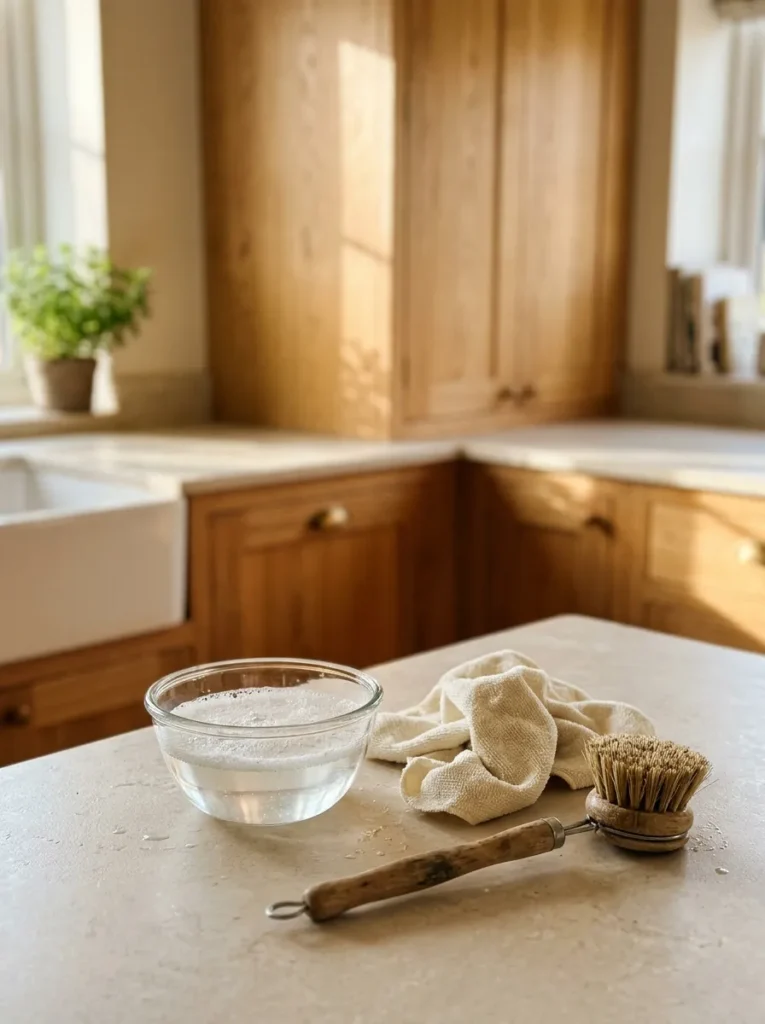
Greasy fingerprints around cabinet handles can build up gradually, especially in busy kitchens. A mild soap solution can loosen light residue on compatible sealed finishes without requiring aggressive scrubbing. Work in small sections so the wood does not remain wet for long. If the cabinet manufacturer recommends a specific cleaner, follow those instructions instead.
Bathroom Surface Soap Spray
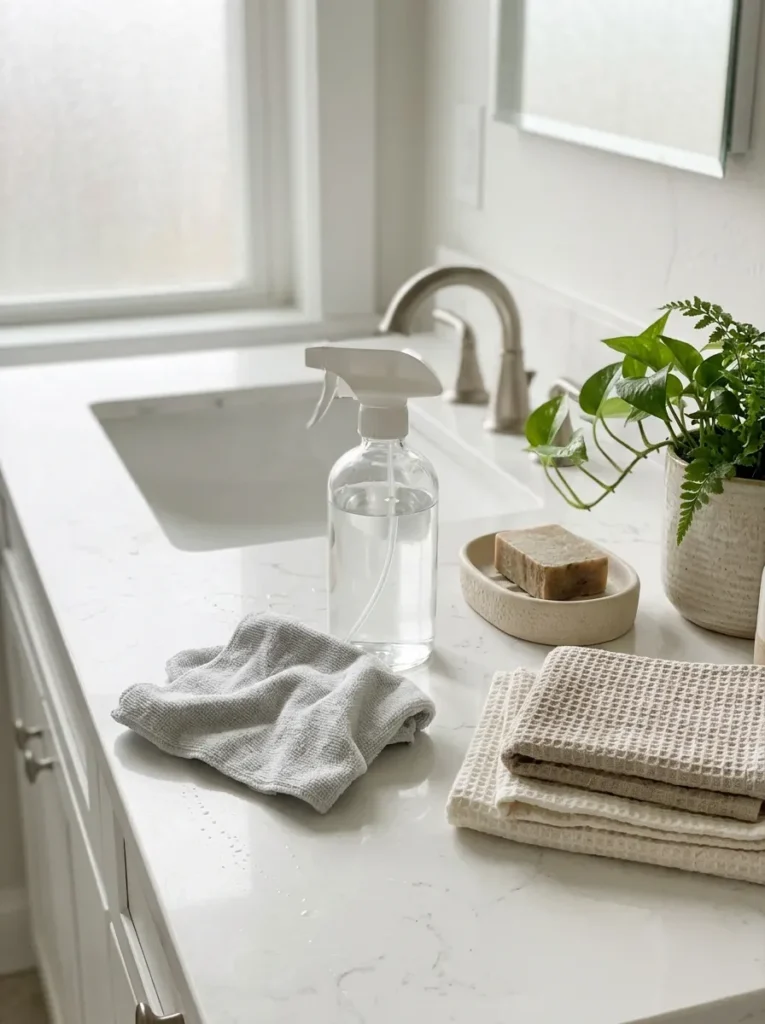
A bathroom counter can collect toothpaste splashes, hand soap, and fingerprints throughout the day. A mild soap spray helps lift everyday grime from compatible washable surfaces, making quick maintenance easier between deeper cleans.
Keep the mixture simple and use a cloth to control excess moisture around taps and seams. Rinse away soap residue when necessary and dry the surface to reduce water marks. This cleaner is for ordinary dirt, not mold removal or disinfection, so choose a labeled specialist product when those tasks are needed.
Ingredients
- 2 cups warm water
- 1 teaspoon mild liquid dish soap
- 1 clean spray bottle
- 1 microfiber cloth
How to Make
- Pour the warm water into a clean container.
- Add the dish soap and stir gently.
- Transfer the solution into a clean, labeled spray bottle.
- Apply a small amount to a microfiber cloth.
- Wipe compatible vanity surfaces, avoiding electrical fittings and unsealed materials.
- Rinse with a clean, damp cloth if needed, then dry.
Eucalyptus Inspired Cleaning Spray
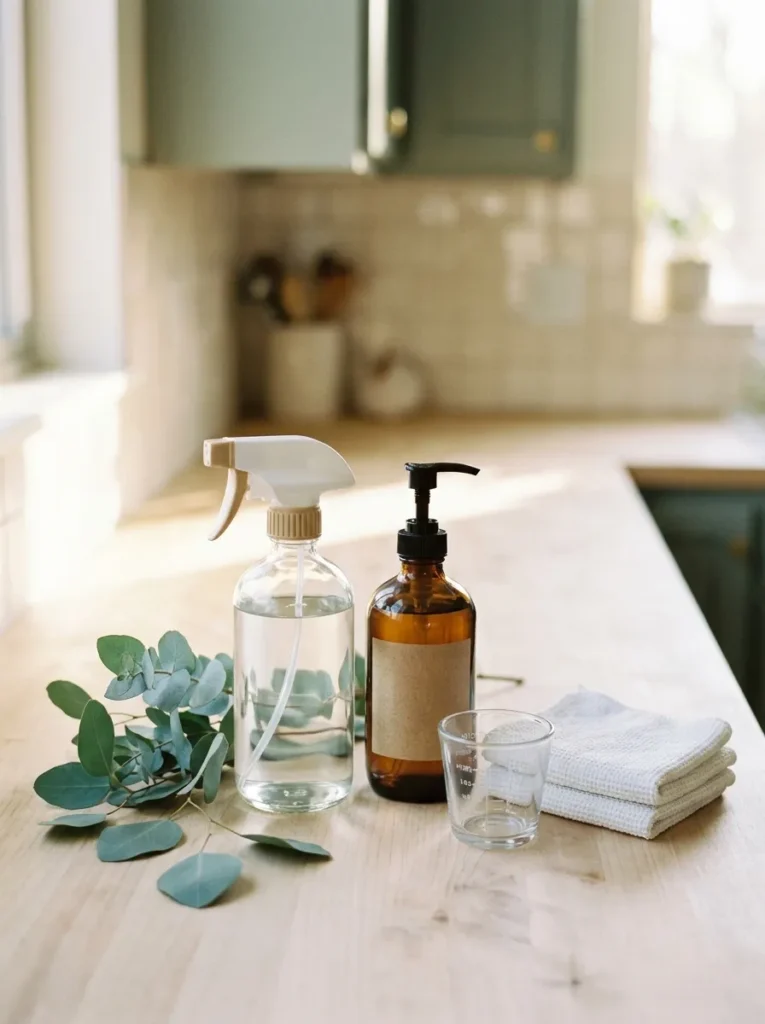
Eucalyptus leaves give a cleaning station a fresh, botanical appearance without needing to become part of the cleaning formula. For everyday household maintenance, a mild soap solution can help remove fingerprints and light dirt from compatible washable surfaces.
Keep the recipe simple and avoid adding essential oils just for fragrance. Eucalyptus oil can be hazardous if swallowed and may pose risks to pets and children. Apply the solution with a cloth, wipe away any residue, and prepare small batches rather than storing homemade mixtures for long periods.
Ingredients
- 2 cups water
- 1 teaspoon mild liquid dish soap
- 1 clean spray bottle
- 1 microfiber cloth
How to Make
- Pour the water into a clean mixing container.
- Add the mild dish soap and stir slowly.
- Transfer the mixture into a clean spray bottle.
- Label the bottle with the ingredients and preparation date.
- Apply a small amount to a microfiber cloth.
- Wipe a compatible surface and remove remaining soap with a damp cloth if necessary.
Hydrogen Peroxide Cleaning Solution

Ingredients
- A commercially prepared hydrogen peroxide product labeled for the intended cleaning task
- A clean cloth or applicator recommended on the product label
- Household gloves if specified by the label
- A clearly labeled storage container, if required by the product instructions
How to Make
- Read the product label to confirm its intended use and concentration.
- Check that the surface is compatible with hydrogen peroxide.
- Wear the recommended protective equipment.
- Apply the product exactly as directed on the label.
- Observe the required contact time if the product is labeled for disinfection.
- Rinse or wipe the surface as instructed.
Hydrogen peroxide products can be useful for certain cleaning tasks, but the correct concentration and application depend on the intended use. Unlike a general soap spray, a product labeled for disinfection may require a specific wet contact time to work as directed. Do not mix hydrogen peroxide with vinegar, bleach, or other cleaners. Store it in its original container, away from children, and follow the manufacturer’s safety instructions.
Cornstarch Window Cleaner
Cost: Low, using common household supplies.
Preparation Time: Approximately 5 minutes.
Skill Level: Beginner-friendly.
Best For: Experimenting with a simple homemade window-cleaning mixture on suitable glass.
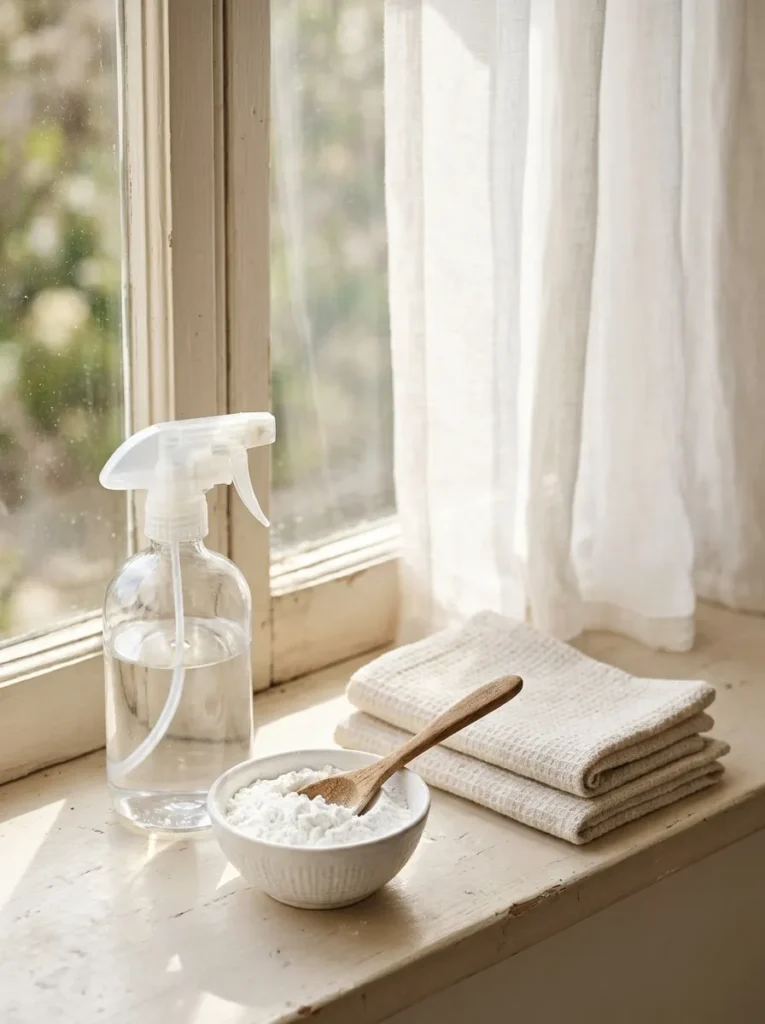
Cornstarch is sometimes included in homemade window-cleaner recipes, but it can leave a powdery residue if it does not disperse or rinse away properly. For reliable, streak-free results, plain water and a clean microfiber cloth may be enough for light dust and fingerprints. For heavier marks, choose a commercial glass cleaner suitable for your window type.
Ingredients
- 2 cups water
- ½ teaspoon cornstarch
- 1 clean mixing container
- 1 lint-free microfiber cloth
How to Make
- Mix the cornstarch with a small amount of water to form a smooth slurry.
- Add the remaining water and stir thoroughly.
- Apply a small amount to a cloth rather than soaking the window.
- Wipe a small test area of compatible glass.
- Buff with a clean, dry microfiber cloth.
- If powdery residue remains, stop using the mixture and clean the glass with plain water.
Salt and Soap Cleaning Paste

Everyday grime sometimes needs gentle scrubbing rather than another spray bottle. A simple salt and soap paste can help loosen stubborn residue on certain durable, scratch-resistant surfaces. The key is to use a light touch and check the surface finish before applying any abrasive ingredient.
Ingredients
- 2 tablespoons fine table salt
- 1 teaspoon mild dish soap
- 1 to 2 teaspoons water
- 1 soft cleaning cloth
How to Make
- Add the salt and dish soap to a small bowl.
- Mix in water gradually until a thick paste forms.
- Apply a small amount to a compatible, scratch-resistant surface.
- Rub gently with a damp cloth, avoiding excessive pressure.
- Rinse thoroughly with clean water.
- Dry the surface with a soft towel.
DO
- Test the paste on a hidden area first.
- Use it only on finishes that tolerate mild abrasion.
- Rinse away every grain of salt after cleaning.
DON’T
- Never use it on delicate polished stone or easily scratched finishes.
- Avoid scrubbing coated glass and glossy appliance surfaces.
- Don’t leave salty residue on metal surfaces.
This mixture is best reserved for occasional spot cleaning rather than daily use. Salt can scratch sensitive finishes and may contribute to corrosion if left on certain metals. For delicate surfaces, a soft cloth and mild soap solution are safer choices. Always follow the manufacturer’s care instructions.
Mild All Purpose Soap Concentrate
Ingredients
- 1 tablespoon liquid Castile soap
- 2 cups water
- 1 clean mixing container
- 1 labeled spray bottle
- 1 microfiber cloth
How to Make
- Pour two cups of water into the mixing container.
- Add one tablespoon of liquid Castile soap.
- Stir gently until the mixture is evenly combined.
- Transfer a small amount into a clean spray bottle.
- Label the bottle with the ingredients and preparation date.
- Apply to a cloth and wipe compatible washable surfaces.
Cost: Low, especially if you already own liquid Castile soap.
Preparation Time: About 3 minutes.
Skill Level: Beginner-friendly.
Best For: Light everyday dirt on compatible sealed and washable surfaces.
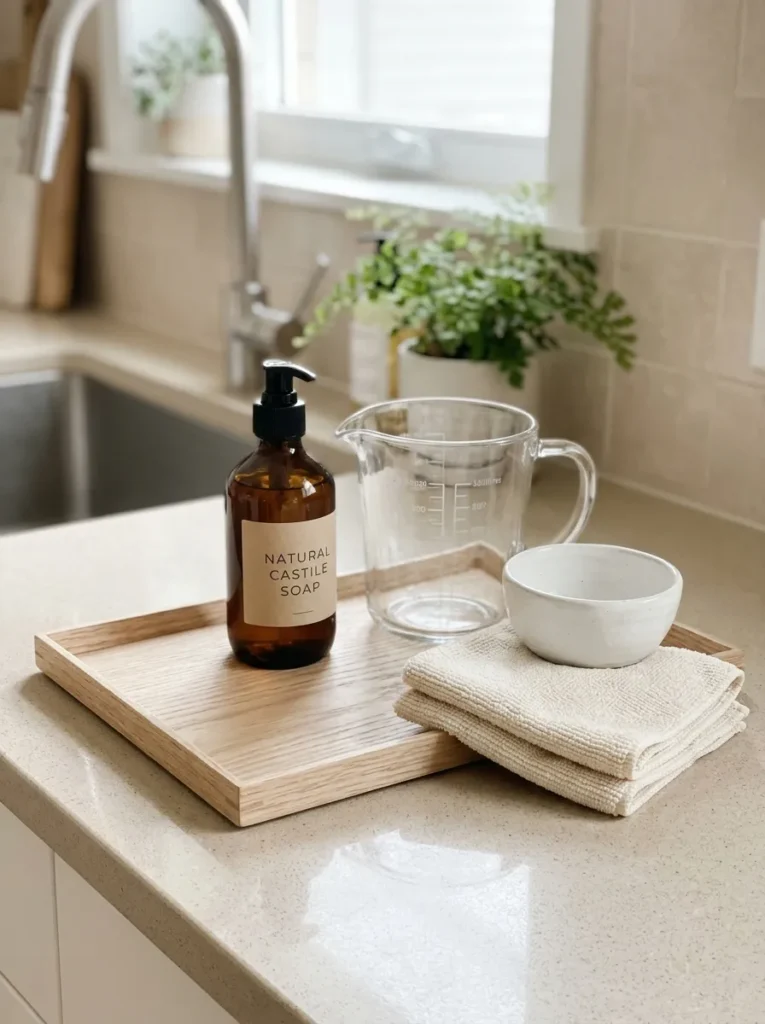
Keeping your cleaning formula simple makes it easier to prepare and use consistently. This diluted soap mixture can help remove ordinary fingerprints and light grime from suitable household surfaces. Use only as much as needed, then wipe with a clean, damp cloth if residue remains. Prepare small quantities and avoid keeping homemade water-based solutions for extended periods.
Unscented Daily Cleaning Spray
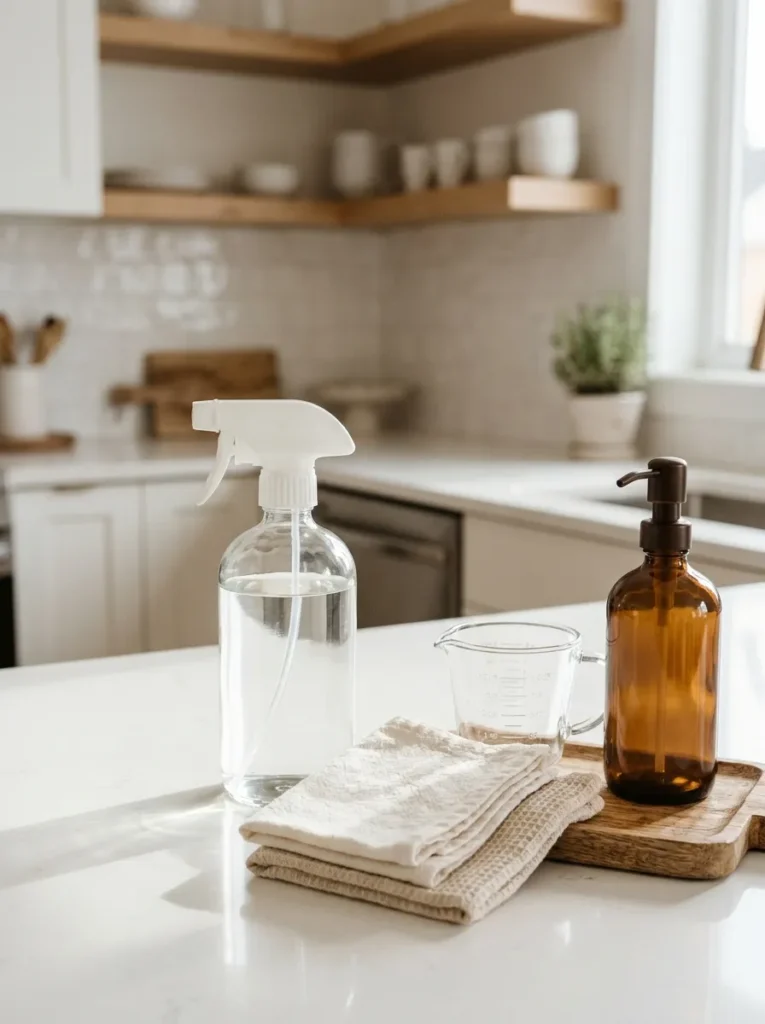
A fragrance-free cleaning routine can be useful for households that prefer to avoid strong scents. This simple mixture uses mild dish soap and water to remove everyday dirt without added perfumes or essential oils. It is intended for routine cleaning, not disinfection.
Ingredients
- 2 cups water
- ½ teaspoon mild, unscented dish soap
- 1 clean spray bottle
- 1 microfiber cloth
How to Make
- Pour the water into a clean container.
- Add the unscented dish soap and stir gently.
- Transfer the mixture into a clean spray bottle.
- Label the bottle with its contents and preparation date.
- Apply a small amount to a microfiber cloth.
- Wipe a compatible surface and rinse if needed.
Quick Tip:
Make only a small batch and prepare a fresh mixture regularly. Water-based homemade cleaners do not contain a validated preservative system, so their storage life and microbial safety cannot be guaranteed.
A fragrance-free spray is a practical choice for light cleaning on suitable washable counters, cabinet fronts, and tables. Keep the formula uncomplicated, use a clean cloth, and avoid applying it to electronics, unfinished wood, or surfaces that require specialist care. Store the bottle securely and never mix the solution with bleach or other cleaning products.
CONCLUSION
A cleaner, fresher home can start with a few thoughtful changes to your everyday routine. These DIY All Purpose Cleaner Recipe Ideas offer inspiration for making simple cleaning solutions, organizing household supplies, and finding practical ways to handle common messes.
Start with one recipe that suits your needs, gather the ingredients, and follow the preparation steps carefully. Always test surfaces first and use appropriate products when disinfection is necessary.
I’ve found that simple routines are often easier to maintain than complicated ones. Save this article on Pinterest so your favorite recipes are easy to find, and share it with friends who enjoy practical home tips. Your next refreshing cleaning routine can start today!
